![Virtuoso Legal Services [Best Legal Opinion Services 24×7]](https://legalopinion.org.in/wp-content/uploads/2023/09/cropped-logo.png)
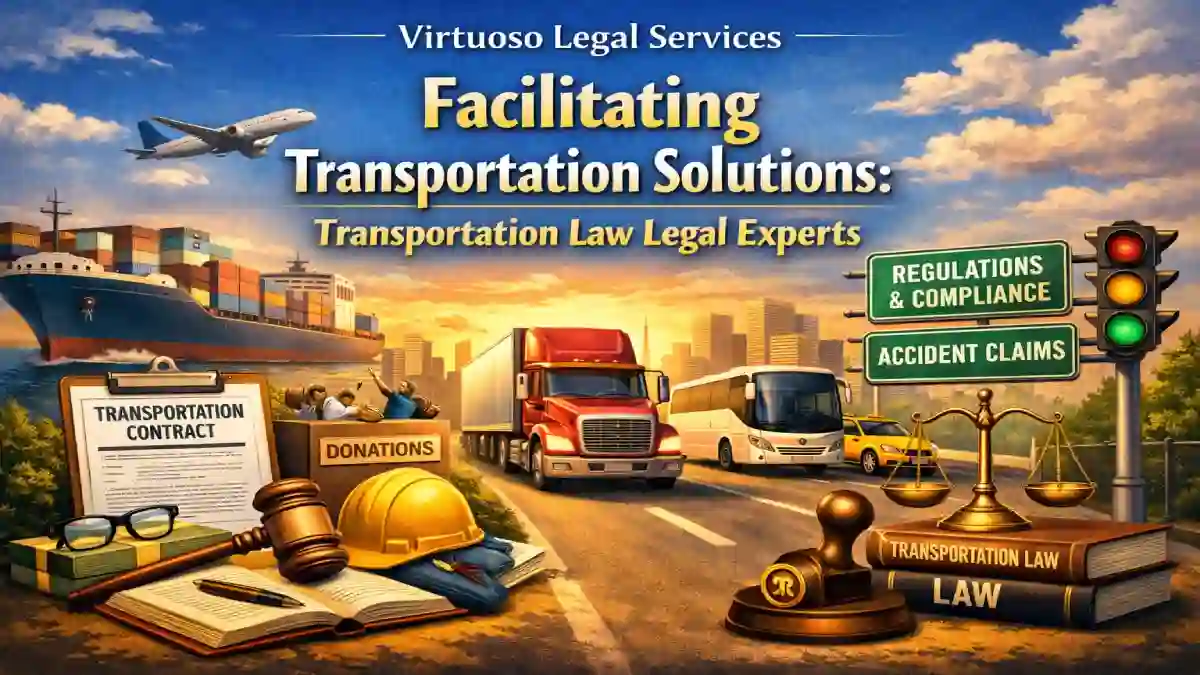
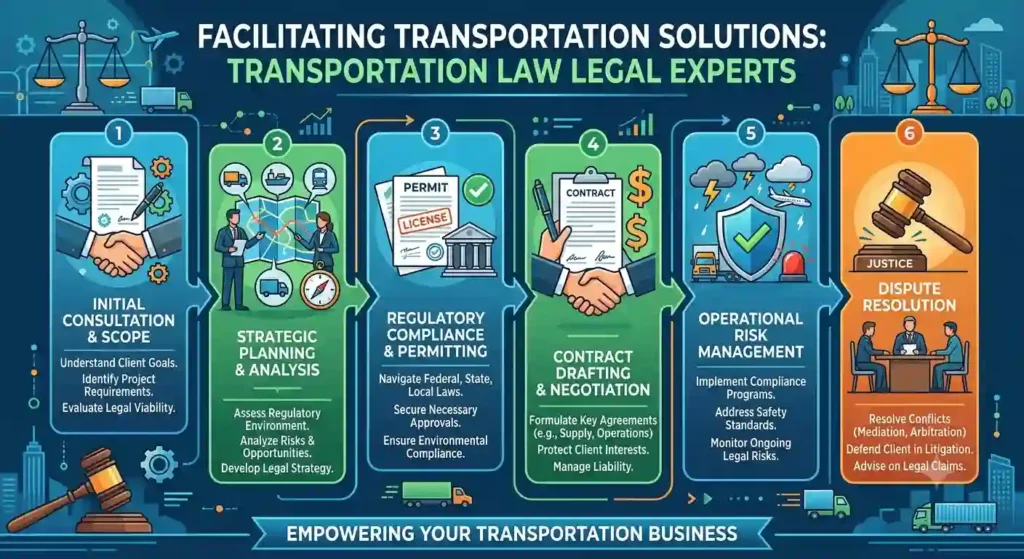
Facilitating Transportation Solutions: Transportation Law Legal Experts
Transportation Law Legal Experts – Transportation law regulates the movement of passengers, goods, logistics, and commercial vehicles across India. Therefore, legal compliance protects transport operators, fleet owners, logistics companies, manufacturers, exporters, importers, and individual vehicle owners. Virtuoso Legal Services advises clients on transportation regulations, licensing, contracts, accident liability, insurance claims, regulatory investigations, and dispute resolution. Transportation activities involve multiple authorities including Regional Transport Offices, State Transport Departments, National Highways Authority, Traffic Police, Motor Accident Claims Tribunals, Commercial Courts, High Courts, and the Supreme Court. Moreover, transportation disputes may involve contractual, regulatory, civil, and criminal issues simultaneously. Relevant laws include the Motor Vehicles Act, CPC for connected civil proceedings, Bharatiya Nyaya Sanhita, 2023, Bharatiya Nagarik Suraksha Sanhita, 2023, and Bharatiya Sakshya Adhiniyam, 2023 where applicable. Early legal consultation minimizes operational risks while ensuring regulatory compliance.
Facilitating Transportation Solutions: Transportation Law Legal Experts – Virtuoso Legal Services
Why Transportation Law Matters for Businesses and Individuals
Transportation operations depend upon strict statutory compliance and effective risk management. Consequently, legal guidance prevents regulatory penalties, contractual disputes, and financial losses. Businesses require legally compliant transport agreements, permits, insurance coverage, vehicle documentation, and safety protocols. Individual vehicle owners benefit from advice regarding accident claims, licensing disputes, permit issues, and liability matters. Furthermore, logistics providers require compliance with taxation, interstate movement, environmental norms, and cargo regulations. Common legal issues include permit cancellations, overloaded vehicles, insurance disputes, cargo loss, road accidents, driver negligence, contractual breaches, and regulatory enforcement. Lawyers review operational documents before disputes escalate. Professional legal support also assists during investigations, negotiations, mediation, arbitration, and litigation. Proper transportation compliance improves operational efficiency while reducing avoidable legal exposure across commercial and personal transportation activities.
Common Transportation Law Issues and Legal Remedies
Transportation disputes arise from regulatory, contractual, operational, and accident-related circumstances. Therefore, selecting the proper legal remedy remains essential.
| Legal Issue | Authority | Primary Remedy |
|---|---|---|
| Road accident claim | Motor Accident Claims Tribunal | Compensation |
| Permit cancellation | Transport Authority | Appeal |
| Cargo loss | Civil Court | Damages |
| Insurance dispute | Consumer Commission | Compensation |
| Contract breach | Commercial Court | Contract enforcement |
| Criminal negligence | Criminal Court | Defence |
Transportation legal support commonly includes:
- Permit compliance
- Contract drafting
- Insurance claims
- Accident defence
- Cargo disputes
- Regulatory appeals
- Fleet compliance
- Legal notices
Moreover, experienced lawyers identify jurisdiction, limitation periods, statutory obligations, and practical remedies before initiating proceedings.
Government Authorities Regulating Transportation Activities
Transportation law involves numerous regulatory authorities responsible for licensing, safety, and enforcement. Consequently, businesses should understand the responsibilities of each authority. Regional Transport Offices issue driving licences, vehicle registrations, permits, fitness certificates, and ownership transfers. State Transport Departments supervise commercial transport operations and statutory compliance. Traffic Police enforce road safety regulations and investigate traffic offences. National Highways Authority oversees highway infrastructure and toll administration. Furthermore, Motor Accident Claims Tribunals adjudicate compensation claims arising from road accidents. Commercial Courts hear contractual transportation disputes. Consumer Commissions resolve insurance and service-related grievances. Lawyers coordinate with relevant authorities while protecting client interests during inspections, investigations, appeals, and litigation. Effective legal representation improves compliance and reduces unnecessary administrative complications.
Transportation Contracts Reduce Commercial Risks
Transportation agreements establish legal rights and obligations between transport service providers and customers. Therefore, professionally drafted contracts minimize future disputes. Lawyers prepare freight agreements, logistics contracts, warehousing arrangements, carriage contracts, vehicle leasing agreements, fleet management contracts, and transportation service agreements. Essential clauses address payment terms, delivery schedules, liability allocation, insurance obligations, indemnities, dispute resolution, termination rights, and force majeure events. Furthermore, carefully drafted agreements reduce ambiguity during commercial relationships. Businesses benefit from clearly defined responsibilities regarding cargo handling, documentation, delays, and loss prevention. Commercial Courts enforce contractual rights where disputes arise. Proper legal drafting also strengthens negotiation opportunities before litigation becomes necessary. Comprehensive transportation contracts protect operational continuity while reducing financial uncertainty across supply chain activities.
Road Accident Claims and Compensation
Road accidents often generate complex legal issues involving multiple parties and statutory remedies. Consequently, immediate legal guidance protects valuable rights after every incident. Motor Accident Claims Tribunals determine compensation based upon evidence, negligence, injuries, disability, dependency, and financial loss. Lawyers gather medical records, police reports, witness statements, insurance documents, photographs, and expert opinions supporting compensation claims. Furthermore, victims may pursue claims against negligent drivers, vehicle owners, insurers, or other responsible parties. Criminal proceedings involving rash driving, negligence, or related offences may proceed under the Bharatiya Nyaya Sanhita, 2023. Investigation procedures follow the Bharatiya Nagarik Suraksha Sanhita, 2023. Documentary and electronic evidence receives consideration under the Bharatiya Sakshya Adhiniyam, 2023. Timely legal action improves recovery prospects while protecting procedural rights.
Commercial Vehicle Compliance Requirements
Commercial transportation businesses must satisfy extensive statutory compliance obligations. Therefore, continuous legal monitoring reduces regulatory violations and operational interruptions. Fleet operators should maintain valid permits, vehicle registrations, insurance policies, pollution certificates, fitness certificates, driver licences, tax payments, and safety records. Authorities regularly inspect commercial vehicles for regulatory compliance. Furthermore, businesses should implement internal compliance systems covering documentation, maintenance, driver training, cargo safety, and accident reporting. Lawyers conduct legal audits identifying potential compliance risks before enforcement actions occur. Proper documentation simplifies regulatory inspections and appellate proceedings. Effective compliance also strengthens insurance coverage and contractual relationships. Continuous legal supervision protects transport businesses against penalties, permit suspension, and avoidable litigation while improving operational reliability.
Insurance Disputes in Transportation Operations
Insurance coverage forms an essential component of transportation risk management. Therefore, policy interpretation frequently determines financial recovery after accidents or cargo losses. Lawyers review insurance policies, exclusions, endorsements, claim procedures, and settlement offers before advising clients. Common disputes involve delayed settlements, repudiated claims, underinsurance, policy interpretation, cargo damage, vehicle theft, and third-party liability. Consumer Commissions and Civil Courts provide appropriate remedies depending upon case circumstances. Furthermore, legal professionals negotiate with insurers before initiating litigation. Comprehensive documentation strengthens claim evaluation while reducing unnecessary disputes. Insurance compliance also supports commercial financing and regulatory obligations. Early legal consultation protects policyholders against wrongful claim denials while maximizing lawful compensation available under applicable insurance contracts.
Regulatory Investigations and Enforcement Proceedings
Transportation businesses occasionally face investigations by regulatory authorities following complaints, inspections, or accidents. Consequently, experienced legal representation becomes essential from the earliest stage. Authorities may examine licensing compliance, permit conditions, safety standards, taxation, environmental obligations, driver qualifications, vehicle fitness, and operational records. Lawyers assist clients during inspections, document production, departmental hearings, and appellate proceedings. Furthermore, legal professionals respond to notices, prepare explanations, and challenge unlawful administrative actions whenever necessary. Administrative remedies remain available before appellate authorities and constitutional courts. Criminal allegations involving forged documents, fraudulent permits, or dishonest conduct may attract provisions under the Bharatiya Nyaya Sanhita, 2023. Strategic legal advice minimizes enforcement risks while preserving commercial operations and regulatory compliance.
Legal Remedies and Professional Transportation Law Support
Transportation disputes require prompt legal action supported by proper documentation and statutory compliance. Therefore, experienced legal representation improves dispute resolution and regulatory outcomes. Virtuoso Legal Services advises transport operators, logistics companies, fleet owners, cargo handlers, insurers, exporters, importers, passengers, and individual vehicle owners. Lawyers evaluate contracts, permits, accident records, insurance policies, regulatory notices, and investigation reports before recommending legal remedies. Furthermore, transportation disputes may proceed before Motor Accident Claims Tribunals, Consumer Commissions, Commercial Courts, Civil Courts, High Courts, and the Supreme Court. Administrative appeals may arise before Transport Authorities and Regional Transport Offices. Criminal allegations involving forged permits, fraud, reckless driving, or document manipulation may invoke the Bharatiya Nyaya Sanhita, 2023, procedural safeguards under the Bharatiya Nagarik Suraksha Sanhita, 2023, and evidentiary principles under the Bharatiya Sakshya Adhiniyam, 2023. Early legal intervention protects rights while reducing operational disruption.
Forums and Authorities Handling Transportation Disputes
Transportation law involves specialized forums depending upon the dispute. Consequently, identifying the proper authority strengthens procedural efficiency.
| Forum or Authority | Common Jurisdiction |
|---|---|
| Motor Accident Claims Tribunal | Accident compensation |
| Regional Transport Office | Licensing and permits |
| Consumer Commission | Insurance disputes |
| Commercial Court | Contract disputes |
| High Court | Writ petitions and appeals |
| Supreme Court | Final appeals |
Clients may also approach:
- Traffic Police.
- State Transport Department.
- National Highways Authority.
- Insurance Ombudsman where applicable.
- Local Police Station.
Moreover, lawyers assess jurisdiction, limitation periods, statutory remedies, and available evidence before initiating legal proceedings.
Documents Required for Transportation Law Cases
Comprehensive documentation strengthens transportation claims and defence strategies. Therefore, clients should preserve all relevant records immediately after disputes arise. Important documents include vehicle registration certificates, driving licences, permits, insurance policies, fitness certificates, pollution certificates, cargo receipts, invoices, freight agreements, accident reports, FIR copies, medical records, repair estimates, photographs, witness details, GPS records, electronic communications, and previous court orders. Lawyers review documentation before filing claims, appeals, or legal notices. Furthermore, complete records improve evidentiary value before tribunals and courts. Electronic evidence receives judicial consideration under the Bharatiya Sakshya Adhiniyam, 2023 wherever applicable. Organized documentation reduces procedural objections while improving settlement opportunities. Proper record maintenance also supports regulatory inspections and insurance compliance throughout transportation operations.
Alternative Dispute Resolution in Transportation Matters
Transportation disputes often benefit from negotiated settlements before prolonged litigation begins. Consequently, mediation and arbitration provide practical alternatives in suitable commercial matters. Lawyers evaluate contractual dispute resolution clauses before initiating proceedings. Mediation preserves commercial relationships while reducing legal expenses. Arbitration offers structured adjudication through agreed procedures and enforceable awards. Furthermore, negotiated settlements frequently resolve freight disputes, logistics disagreements, insurance matters, warehousing conflicts, and payment issues efficiently. Commercial entities often prefer confidential dispute resolution mechanisms protecting business reputation. Legal professionals prepare settlement agreements ensuring enforceability and statutory compliance. Alternative dispute resolution complements judicial remedies rather than replacing them entirely. Strategic legal advice helps clients select the most effective forum according to dispute complexity, contractual obligations, and commercial objectives.
Legal Remedies for Transportation Businesses
Transportation businesses possess several statutory and contractual remedies against unlawful actions and commercial losses. Therefore, legal strategy depends upon the facts and governing legislation. Civil remedies include recovery of money, damages, injunctions, declarations, and specific performance under applicable laws and the CPC where relevant. Consumer remedies address insurance deficiencies and service failures. Administrative appeals challenge permit cancellations, licence suspensions, and regulatory penalties. Criminal complaints under the Bharatiya Nyaya Sanhita, 2023 may arise for fraud, forgery, theft, cheating, or document falsification. Investigations proceed according to the Bharatiya Nagarik Suraksha Sanhita, 2023. Lawyers coordinate civil, criminal, and regulatory proceedings to avoid conflicting legal positions. Comprehensive legal planning protects transportation businesses from financial and operational risks.
Compliance Strategies for Long-Term Transportation Success
Continuous legal compliance strengthens operational stability and commercial growth. Therefore, transport businesses should implement regular compliance audits. Internal reviews should verify licence validity, permit renewals, insurance coverage, taxation, driver qualifications, vehicle maintenance, safety procedures, and statutory reporting obligations. Lawyers conduct compliance assessments while recommending corrective measures before authorities initiate enforcement proceedings. Furthermore, businesses should maintain updated operational manuals and document retention policies. Employee training reduces violations involving road safety, cargo handling, and regulatory obligations. Periodic legal reviews also identify changes in transportation legislation and judicial precedents. Proactive compliance minimizes litigation, regulatory penalties, permit suspensions, and commercial interruptions. Effective governance ultimately improves customer confidence and long-term business sustainability.
Transportation Crimes and Criminal Defence
Certain transportation disputes involve criminal investigations requiring immediate legal assistance. Consequently, accused persons and businesses should obtain legal advice without delay. Criminal allegations may include forged permits, vehicle theft, cargo theft, cheating, fraudulent insurance claims, document fabrication, reckless driving, and criminal negligence. Police investigate such offences following the Bharatiya Nagarik Suraksha Sanhita, 2023. Courts evaluate documentary and electronic evidence under the Bharatiya Sakshya Adhiniyam, 2023. The Bharatiya Nyaya Sanhita, 2023 governs substantive criminal liability. Lawyers protect constitutional rights during investigations, bail proceedings, questioning, and trial. Coordinated defence strategies prevent unnecessary legal complications while preserving commercial interests. Professional representation also assists during negotiations with investigating agencies and prosecuting authorities.
Why Choose Virtuoso Legal Services
Transportation law demands practical legal knowledge across regulatory, civil, commercial, and criminal matters. Therefore, Virtuoso Legal Services delivers comprehensive legal assistance for transportation businesses and individual clients throughout India. Our legal team advises on licensing, permits, regulatory compliance, fleet management, transportation contracts, insurance disputes, accident claims, cargo litigation, commercial recovery, and appellate proceedings. Additionally, we represent clients before Regional Transport Offices, Motor Accident Claims Tribunals, Consumer Commissions, Commercial Courts, High Courts, and the Supreme Court. We prepare legal notices, compliance opinions, contracts, appeals, and litigation strategies supported by current legislation and judicial precedents. Our client-focused approach emphasizes preventive compliance, efficient dispute resolution, and strong courtroom advocacy. Professional legal guidance protects transportation operations while supporting sustainable commercial success.
Frequently Asked Questions
1. Why should transportation businesses seek legal advice?
Legal advice ensures regulatory compliance, protects commercial interests, resolves disputes efficiently, and reduces penalties, litigation, and operational interruptions.
2. Which authority handles road accident compensation claims?
Motor Accident Claims Tribunals generally decide compensation claims involving road accidents, injuries, fatalities, and related insurance disputes.
3. Can transport permit cancellations be challenged?
Yes. Aggrieved parties may file statutory appeals before competent transport authorities or approach appropriate courts where permitted by law.
4. What documents are essential for transportation disputes?
Important documents include permits, registrations, insurance policies, contracts, accident reports, invoices, licences, photographs, and supporting evidence.
5. Can transportation disputes involve criminal proceedings?
Yes. Fraud, forged permits, theft, cheating, reckless driving, and similar offences may attract proceedings under the Bharatiya Nyaya Sanhita, 2023.
6. How can Virtuoso Legal Services assist transportation clients?
Our lawyers provide compliance advice, contract drafting, accident representation, insurance assistance, regulatory defence, litigation, appeals, and dispute resolution.
Read More
- Ensuring Road Safety: Traffic Violation Legal Opinion Services
- Protecting Your Brand: Trademark Registration Legal Experts
- Maximizing Tax Efficiency: Taxation Law Legal Opinion Services
- Supporting Sporting Integrity: Sports Law Legal Experts
- Community Legal Support: Society Law Legal Opinion Services
- Ministry of Road Transport and Highways (MoRTH)