![Virtuoso Legal Services [Best Legal Opinion Services 24×7]](https://legalopinion.org.in/wp-content/uploads/2023/09/cropped-logo.png)
Ensuring Workplace Safety: Workmen Compensation Act Legal Experts
Workmen Compensation Act Legal Experts – Workplace safety protects employees while reducing legal and financial risks for employers. The Employees’ Compensation Act, 1923 (formerly the Workmen’s Compensation Act) governs compensation for employees suffering workplace injuries, occupational diseases, permanent disability, or death arising during employment. Moreover, the Occupational Safety, Health and Working Conditions Code, 2020 strengthens workplace safety standards across industries. Virtuoso Legal Services advises employees, employers, contractors, factories, construction companies, logistics firms, transport operators, and manufacturing industries regarding compensation claims and statutory compliance. Our advocates prepare compensation applications, legal notices, replies, settlement agreements, and litigation documents. Furthermore, we represent clients before the Employees’ Compensation Commissioner, Labour Authorities, Civil Courts, High Courts, and the Supreme Court. Criminal negligence matters may involve BNS, BNSS, BSA, and jurisdictional police investigations. Consequently, clients receive comprehensive legal protection while ensuring lawful workplace safety compliance.
Ensuring Workplace Safety: Workmen Compensation Act Legal Experts – Virtuoso Legal Services
Legal Framework Governing Workplace Compensation
The Employees’ Compensation Act, 1923 creates statutory liability for employers when employees sustain employment-related injuries or occupational diseases. Accordingly, employers should understand compensation obligations before workplace incidents occur. Compensation depends upon employment status, injury nature, disability percentage, wages, and statutory provisions. Furthermore, employers must maintain safe working environments through appropriate equipment, supervision, training, and compliance systems. Other laws including the Occupational Safety, Health and Working Conditions Code, 2020, Factories Act requirements where applicable, labour regulations, and environmental safety norms influence workplace obligations. Our advocates review employment contracts, accident reports, medical records, wage details, insurance policies, and safety documentation before advising clients. Moreover, timely legal intervention reduces disputes and supports fair compensation. Consequently, businesses strengthen compliance while employees receive effective legal guidance following workplace accidents or occupational illnesses.
Employees Eligible for Compensation Claims
Eligibility under the Employees’ Compensation Act depends upon employment relationship, workplace injury, and statutory conditions. Therefore, employees should seek legal advice immediately after serious workplace accidents. Eligible categories commonly include factory workers, construction labourers, drivers, technicians, machine operators, electricians, mechanics, warehouse employees, contract workers, and other qualifying personnel. Moreover, occupational diseases affecting specified industries may also attract compensation benefits. Our lawyers evaluate employment records, accident circumstances, wage details, medical reports, and employer obligations before initiating proceedings. We also determine whether Employees’ State Insurance benefits or compensation remedies apply under applicable legislation. Furthermore, legal assessment identifies additional claims involving contractual obligations or negligence. Consequently, injured employees understand their legal rights while employers receive guidance regarding statutory responsibilities and workplace safety compliance.
Types of Workplace Injury Claims
Different workplace incidents create different legal rights under compensation legislation. Accordingly, proper classification strengthens claim preparation and legal representation. Common compensation claims include:
- Permanent disability.
- Temporary disability.
- Workplace death.
- Occupational diseases.
- Industrial accidents.
- Machinery injuries.
- Construction accidents.
- Electrical accidents.
- Chemical exposure.
- Transportation injuries.
Every claim requires supporting medical evidence and employment documentation. Moreover, our advocates collect accident reports, witness statements, hospital records, salary documents, and insurance information before filing proceedings. Early documentation significantly improves claim evaluation and legal outcomes. Additionally, we advise employers regarding statutory reporting obligations following workplace incidents. Consequently, employees and employers receive practical legal assistance throughout compensation proceedings while reducing procedural delays and compliance risks.
Authorities Handling Compensation Matters
Several statutory authorities supervise workplace compensation, labour compliance, and related legal disputes. Therefore, understanding jurisdiction helps parties pursue appropriate legal remedies.
| Authority | Primary Function |
|---|---|
| Employees’ Compensation Commissioner | Compensation claims |
| Labour Department | Labour law administration |
| Labour Commissioner | Compliance oversight |
| Civil Courts | Related civil disputes |
| High Court | Appeals and writs |
| Supreme Court | Constitutional appeals |
| Police Station | Criminal investigation where applicable |
| Industrial Authorities | Workplace compliance |
Moreover, government departments may coordinate during accident investigations involving industrial safety violations. Our advocates represent clients before every appropriate authority while ensuring procedural compliance. Consequently, legal disputes progress efficiently through proper forums according to applicable jurisdiction and statutory requirements.
Employer Responsibilities Under Compensation Law
Employers carry important legal responsibilities for maintaining workplace safety and statutory compliance. Accordingly, organizations should establish effective safety management systems before operations begin. Primary employer obligations include conducting safety training, maintaining protective equipment, reporting workplace accidents, preserving statutory records, providing medical assistance, and complying with compensation requirements. Furthermore, businesses should regularly inspect machinery, hazardous processes, electrical systems, and workplace infrastructure. Our legal team reviews employment policies, accident response procedures, contractor agreements, insurance coverage, and compliance documentation. Early legal advice frequently prevents regulatory action and compensation disputes. Additionally, employers benefit from periodic compliance audits addressing workplace risks. Consequently, organizations protect employees while reducing litigation exposure and strengthening statutory compliance across industrial and commercial establishments.
Benefits of Professional Legal Assistance
Professional legal representation helps both employees and employers resolve workplace compensation matters efficiently. Therefore, Virtuoso Legal Services provides comprehensive legal support covering compensation claims, employer defence, accident investigations, settlement negotiations, compliance audits, and appellate proceedings. Our advocates prepare compensation petitions, legal notices, written statements, medical evidence, witness documentation, and appeal papers according to statutory requirements. Moreover, we coordinate with medical professionals, safety experts, insurance companies, and labour consultants whenever multidisciplinary support benefits clients. Timely legal advice minimizes disputes while protecting statutory rights. Additionally, we represent clients before Commissioners, Labour Authorities, Civil Courts, High Courts, and the Supreme Court. Consequently, injured employees secure lawful compensation while employers maintain compliance through practical legal solutions and effective workplace risk management.
Compensation Calculation and Claim Procedure
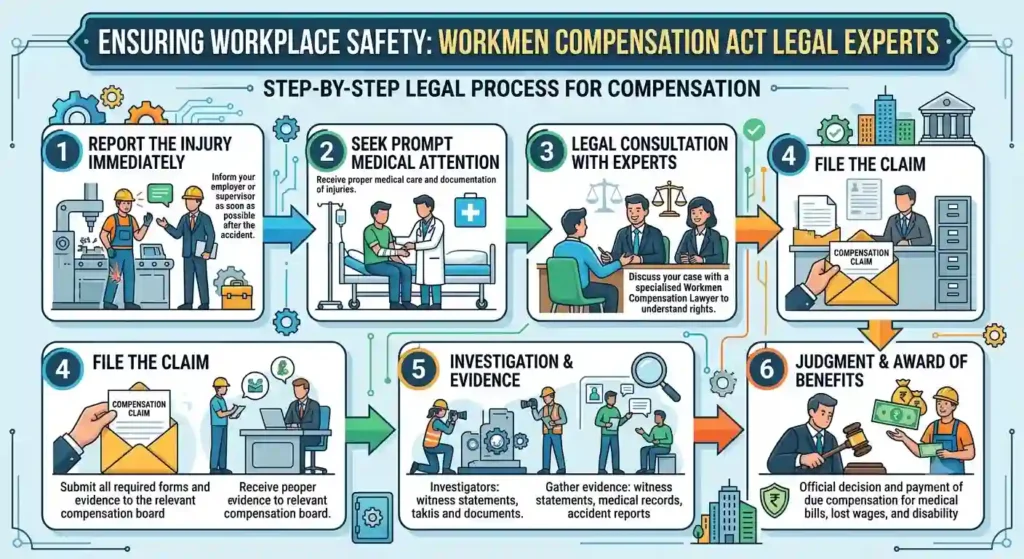
Compensation under the Employees’ Compensation Act, 1923 depends upon statutory formulas, employee wages, age, injury nature, and percentage of disability. Therefore, accurate legal assessment becomes essential before filing claims. The process generally includes reporting the accident, obtaining medical treatment, collecting employment records, preparing supporting documents, and filing an application before the Employees’ Compensation Commissioner. Moreover, employers should preserve accident reports, wage registers, attendance records, insurance documents, and safety records. Our advocates evaluate medical evidence, disability certificates, salary details, and statutory provisions before calculating compensation. We also negotiate settlements wherever legally appropriate. Furthermore, timely filing prevents unnecessary procedural complications and limitation issues. Consequently, employees receive fair compensation while employers resolve workplace injury claims through lawful procedures and effective legal representation.
Occupational Diseases and Employer Liability
Certain occupations expose employees to long-term health risks resulting in compensable occupational diseases. Accordingly, employers should implement preventive workplace safety measures and periodic medical monitoring. Occupational diseases may arise from chemical exposure, dust inhalation, asbestos, hazardous substances, repetitive industrial activities, excessive noise, or toxic environments. Moreover, employees must establish the connection between employment and the diagnosed medical condition. Our advocates examine employment history, medical records, expert opinions, workplace inspections, and statutory safety compliance before initiating proceedings. Early legal advice strengthens evidence collection and claim preparation. Additionally, employers receive guidance regarding preventive compliance and occupational health obligations. Consequently, lawful workplace practices reduce compensation disputes while protecting employee health and organizational compliance.
Workplace Accident Investigation and Evidence
Accurate investigation forms the foundation of successful workplace compensation proceedings. Therefore, parties should preserve evidence immediately after an industrial accident. Important evidence generally includes:
- Accident reports.
- Medical records.
- Disability certificates.
- Witness statements.
- Employment contracts.
- Salary records.
- Attendance registers.
- Photographs.
- CCTV footage.
- Safety inspection reports.
The Bharatiya Sakshya Adhiniyam, 2023 governs evidentiary principles wherever applicable. Moreover, digital evidence requires proper preservation and authentication before judicial consideration. Our lawyers evaluate documentary records, technical reports, expert opinions, and employer compliance documents before presenting claims. Additionally, we challenge inaccurate investigations or unsupported allegations through lawful procedures. Consequently, employees and employers receive effective legal representation supported by credible evidence and procedural compliance.
Employer Defence and Legal Remedies
Employers may defend compensation claims using legally recognized grounds supported by reliable evidence. Accordingly, every defence strategy requires careful factual and legal evaluation. Common employer defences include:
| Defence | Purpose |
|---|---|
| No employment relationship | Challenge eligibility |
| Injury outside employment | Deny statutory liability |
| Insufficient evidence | Contest claim |
| Medical dispute | Challenge disability assessment |
| Limitation | Procedural defence |
| Settlement | Resolve dispute |
Furthermore, employers should avoid unsupported denials because courts carefully examine available evidence. Our advocates prepare written objections, legal submissions, documentary evidence, and witness examinations before competent authorities. Where disputes continue, appellate remedies remain available before higher judicial forums. Consequently, businesses protect their legal interests while ensuring compliance with compensation legislation.
Appeals and Judicial Remedies
Indian law provides several remedies against compensation orders affecting employees or employers. Therefore, parties should evaluate available legal options immediately after receiving adverse decisions. Available remedies include:
- Review applications.
- Statutory appeals.
- Writ petitions.
- Civil proceedings where maintainable.
- Constitutional remedies before superior courts.
Moreover, High Courts examine legal errors, procedural irregularities, and jurisdictional issues arising from compensation proceedings. Our lawyers prepare appeal memoranda, affidavits, written submissions, and supporting records according to statutory requirements. Additionally, we advise clients regarding limitation periods, interim relief, and enforcement procedures. Proper legal strategy strengthens the possibility of successful appellate outcomes. Consequently, employees and employers receive comprehensive legal support throughout every stage of workplace compensation litigation.
Criminal Liability Following Workplace Accidents
Serious industrial accidents sometimes involve criminal investigations alongside compensation proceedings. Accordingly, employers should obtain immediate legal assistance whenever police authorities initiate inquiries. Allegations involving negligence, unsafe practices, forged records, or unlawful conduct may attract provisions under BNS, BNSS, and related criminal laws. Moreover, police stations may investigate incidents involving workplace deaths, grievous injuries, or serious statutory violations. Our advocates represent clients during investigations, anticipatory bail matters, evidence collection, and criminal court proceedings. We also coordinate defence strategies with ongoing compensation claims to maintain legal consistency. Furthermore, timely legal intervention helps protect procedural rights throughout the investigation process. Consequently, organizations and employees receive integrated legal representation addressing both compensation claims and connected criminal proceedings.
Workplace Safety Compliance and Risk Prevention
Preventive compliance remains the most effective strategy for reducing workplace injuries and compensation disputes. Therefore, every employer should establish structured occupational safety programs supported by regular legal review. Recommended compliance measures include:
- Conduct safety audits.
- Train employees regularly.
- Maintain protective equipment.
- Report accidents promptly.
- Preserve statutory registers.
- Review contractor compliance.
- Inspect machinery periodically.
- Maintain medical records.
- Update safety policies.
- Obtain legal compliance audits.
Moreover, continuous compliance strengthens employee confidence while reducing enforcement risks. Virtuoso Legal Services assists organizations with workplace safety audits, compensation advisory, labour compliance, accident response planning, and litigation management. Consequently, employers create safer workplaces while minimizing legal exposure and maintaining long-term statutory compliance.
Why Choose Virtuoso Legal Services
Virtuoso Legal Services delivers comprehensive legal assistance for workplace injury claims, employer compliance, and compensation litigation. Therefore, employees and employers receive practical legal solutions tailored to their specific circumstances. Our advocates assist factories, construction companies, transport operators, warehouses, engineering industries, hospitals, educational institutions, contractors, and commercial establishments. We provide:
- Compensation claim representation.
- Employer legal defence.
- Compliance audits.
- Accident investigations.
- Settlement negotiations.
- Legal notices.
- Appeals.
- Court representation.
- Risk management advice.
Moreover, our team evaluates employment records, insurance policies, medical evidence, accident reports, and statutory obligations before recommending legal strategies. We also coordinate with medical experts, safety consultants, insurance companies, and technical specialists whenever necessary. Consequently, clients receive reliable legal representation focused on lawful compensation, workplace safety, and effective dispute resolution.
Emerging Workplace Safety Laws and Compliance
Indian workplace safety regulations continue evolving through labour law reforms and judicial interpretation. Accordingly, employers should monitor legislative developments affecting employee welfare and industrial safety. The Occupational Safety, Health and Working Conditions Code, 2020 strengthens compliance expectations across several industries after implementation by the respective governments. Moreover, organizations should regularly update employment policies, safety manuals, contractor agreements, and emergency response procedures. Our advocates advise clients regarding changing statutory obligations, labour inspections, accident reporting, and documentation standards. Furthermore, electronic evidence and digital workplace records require proper preservation under BSA principles wherever applicable. Connected contractual disputes may involve CPC procedures before competent Civil Courts. Criminal negligence investigations may require compliance with BNS and BNSS provisions. Consequently, proactive legal planning supports safer workplaces while reducing compensation disputes and regulatory enforcement risks.
Long-Term Legal Protection for Employers and Employees
Sustainable workplace safety requires continuous legal compliance, employee awareness, and effective risk management. Therefore, Virtuoso Legal Services develops long-term compliance strategies protecting both employers and employees. Our legal professionals conduct policy reviews, compliance assessments, accident response planning, training support, and documentation audits. Moreover, we advise businesses regarding contractor liability, insurance coverage, occupational health obligations, and statutory reporting requirements. Every legal strategy emphasizes prevention instead of reactive litigation. Additionally, we represent clients before the Employees’ Compensation Commissioner, Labour Authorities, Civil Courts, High Courts, Supreme Court, and other competent forums. Timely legal guidance helps reduce disputes while protecting statutory rights. Consequently, organizations build legally compliant workplaces that promote employee welfare, operational continuity, and responsible corporate governance.
Conclusion
Ensuring workplace safety and lawful compensation benefits both employees and employers. Virtuoso Legal Services provides complete legal support under the Employees’ Compensation Act, 1923 and related labour legislation. Our advocates assist with compensation claims, employer compliance, workplace accident investigations, occupational disease claims, settlement negotiations, appeals, and litigation. Moreover, we represent clients before the Employees’ Compensation Commissioner, Labour Authorities, Civil Courts, High Courts, Supreme Court, and other appropriate forums. Connected civil disputes may involve CPC provisions, while criminal investigations relating to workplace accidents may require legal assistance under BNS, BNSS, BSA, and jurisdictional police procedures. Furthermore, our preventive compliance services help organizations reduce legal risks through effective workplace safety management. Consequently, clients receive dependable legal representation supporting employee welfare, statutory compliance, business continuity, and fair resolution of workplace compensation disputes.
Frequently Asked Questions
FAQ 1: Who can claim compensation under the Employees’ Compensation Act, 1923?
Employees suffering employment-related injuries, occupational diseases, permanent disability, or dependants of deceased employees may claim compensation under applicable statutory conditions.
FAQ 2: What documents are required for a workplace compensation claim?
Medical records, accident reports, employment documents, wage records, disability certificates, witness statements, and supporting evidence generally strengthen compensation claims.
FAQ 3: Which authority decides compensation disputes?
The Employees’ Compensation Commissioner primarily decides claims, while appellate remedies may be available before competent High Courts according to law.
FAQ 4: Can employers challenge compensation claims?
Yes. Employers may contest claims using legally valid grounds supported by employment records, medical evidence, statutory provisions, and other admissible documents.
FAQ 5: What happens after a serious workplace accident?
Employers should provide medical assistance, report the incident, preserve evidence, maintain records, cooperate with authorities, and seek immediate legal guidance.
FAQ 6: Why hire workplace compensation lawyers?
Experienced lawyers protect legal rights, calculate compensation, prepare evidence, manage litigation, handle compliance, negotiate settlements, and represent clients before appropriate authorities and courts.
Read More
- Planning for the Future: Will Legal Opinion Services
- Navigating Investment Ventures: Venture Capital Legal Experts
- Safeguarding Your Legacy: Trust Deed Legal Opinion Services
- Facilitating Transportation Solutions: Transportation Law Legal Experts
- Ensuring Road Safety: Traffic Violation Legal Opinion Services
- Ministry of Labour & Employment, Government of India