![Virtuoso Legal Services [Best Legal Opinion Services 24×7]](https://legalopinion.org.in/wp-content/uploads/2023/09/cropped-logo.png)

Safeguarding Property Rights: Property Law Legal Experts
Safeguarding Property Rights – Property ownership creates financial security and long-term family stability for Indian citizens. However, unlawful encroachments and fraudulent transactions threaten legitimate ownership rights regularly. Therefore, property owners require strong legal protection and timely legal intervention. Virtuoso Legal Services assists clients in resolving civil, criminal, and regulatory property disputes effectively. The firm handles land grabbing, partition disputes, illegal possession, and forged documentation matters. Chennai property owners frequently approach civil courts and revenue authorities regarding ownership conflicts. Moreover, nearby police stations investigate cheating, trespass, and forgery offences under the BNS framework. Property litigation also involves municipal authorities, registration departments, and land revenue offices. Courts rely upon CPC procedures and BSA evidentiary standards during property adjudication proceedings. Consequently, legal professionals must analyze title deeds, encumbrance certificates, and survey records carefully. Strong legal guidance prevents future litigation risks while safeguarding ownership interests across residential, commercial, and agricultural properties throughout Tamil Nadu.
Safeguarding Property Rights: Property Law Legal Experts – Virtuoso Legal Services
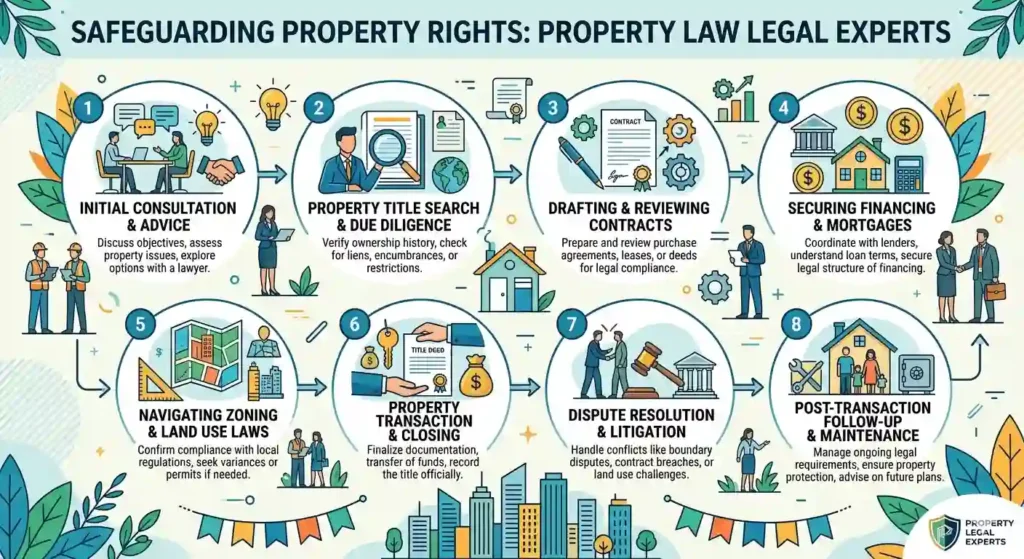
Understanding Property Rights Under Indian Legal Frameworks
Indian property laws protect ownership rights, possession rights, and lawful property transfers comprehensively. Several statutes regulate immovable property transactions, inheritance claims, and tenancy arrangements across India. Furthermore, registration laws require proper documentation and stamp duty compliance during transactions. Property owners frequently encounter disputes involving ancestral assets, partition claims, and fraudulent registrations. Chennai courts examine title documents, tax receipts, and possession records carefully before granting relief. The CPC governs civil proceedings involving injunctions, declarations, and recovery of possession claims. Additionally, BNS provisions address criminal trespass, cheating, forgery, and fraudulent land dealings effectively. Revenue authorities supervise patta transfers, land classifications, and mutation procedures. Therefore, property owners should verify ownership history before purchasing any immovable asset. Legal professionals assist clients before civil courts, tribunals, and registration authorities regularly. Proper legal due diligence significantly reduces future ownership conflicts and financial losses during property acquisition and investment activities.
Common Property Disputes Affecting Chennai Property Owners
Property disputes create financial uncertainty and emotional stress for families and commercial investors. Several Chennai disputes involve illegal encroachments and unauthorized property occupation by third parties. Builders occasionally delay project completion and violate approved development agreements intentionally. Additionally, forged sale deeds and fraudulent power of attorney transactions cause ownership complications. Family members frequently contest inheritance rights and ancestral property partitions before civil courts. Tenancy disputes also arise from unlawful eviction attempts and unpaid rental obligations. Nearby police stations investigate criminal intimidation and property-related cheating complaints under applicable BNS provisions. Consumer forums sometimes handle disputes involving construction defects and delayed property possession matters. Therefore, affected parties should preserve original title deeds and transaction records carefully. Legal experts analyze survey maps, encumbrance certificates, and registration details during dispute resolution proceedings. Timely legal action usually prevents irreversible ownership complications and prolonged litigation expenses for legitimate property holders.
Importance of Title Verification Before Property Purchases
Property buyers must conduct detailed title verification before executing purchase agreements and sale deeds. Fraudulent sellers often conceal pending litigation, mortgages, and ownership defects from unsuspecting purchasers. Consequently, buyers face expensive legal disputes and potential ownership cancellation proceedings later. Legal professionals examine encumbrance certificates, patta records, and historical title documents thoroughly. Registration departments maintain important transaction records supporting ownership verification and transfer legality. Moreover, revenue authorities provide land classification and survey details affecting development rights. Buyers should verify court proceedings, municipal approvals, and tax payment records independently. Nearby sub-registrar offices maintain essential registration documents for public inspection and legal scrutiny. Therefore, comprehensive due diligence significantly reduces fraud risks and investment uncertainties. Property lawyers also identify zoning violations and unauthorized construction activities during legal investigations. Strong title verification ensures lawful ownership transfers while protecting purchasers against future civil and criminal property disputes.
Jurisdiction and Forums Handling Property Litigation Matters
Property litigation jurisdiction depends upon property location, dispute value, and legal issues involved. Civil courts primarily adjudicate ownership disputes, injunction claims, and possession recovery proceedings. Higher value matters proceed before district courts and appellate judicial authorities accordingly. Additionally, revenue tribunals address patta disputes and land classification conflicts involving government records. Consumer commissions hear complaints regarding delayed construction and builder service deficiencies occasionally. Criminal courts handle trespass, forgery, and cheating offences under the BNS framework effectively. Chennai residents also approach registration authorities regarding fraudulent registrations and illegal documentation practices. The CPC governs civil procedures, pleadings, evidence presentation, and execution proceedings comprehensively. Moreover, the BNSS regulates criminal investigations involving property-related offences and fraudulent transactions. Therefore, correct forum selection remains essential for successful dispute resolution and timely judicial relief. Experienced property lawyers evaluate jurisdictional requirements carefully before initiating litigation or regulatory proceedings before competent authorities.
Legal Remedies for Property Rights Protection and Enforcement
Indian property laws provide several remedies against unlawful occupation and fraudulent property transactions. Courts may grant permanent injunctions preventing illegal interference with lawful property possession. Additionally, civil judges order recovery of possession and cancellation of fraudulent documents regularly. Criminal proceedings under the BNS address forgery, cheating, criminal trespass, and intimidation effectively. Chennai property owners also seek partition decrees and declaration orders before civil courts. Revenue authorities correct land records and mutation entries through administrative proceedings occasionally. Therefore, strategic legal action helps owners secure ownership rights and prevent further violations. Property lawyers prepare pleadings, evidence compilations, and legal notices supporting judicial claims. Courts frequently examine registered documents, witness testimony, and electronic communications under BSA standards. Timely legal intervention significantly improves litigation outcomes and property recovery possibilities. Effective legal remedies also discourage fraudulent land dealings while strengthening property ownership confidence across Chennai and Tamil Nadu.
Role of Property Lawyers in Real Estate Dispute Resolution
Property lawyers protect ownership rights through litigation, negotiation, and preventive legal advisory services consistently. They analyze contracts, title deeds, and registration records before recommending appropriate legal strategies. Furthermore, advocates represent clients before civil courts, tribunals, and government authorities regularly. Chennai property lawyers frequently handle inheritance disputes, partition claims, and illegal possession matters. Legal professionals also coordinate with surveyors, valuers, and registration officials during property investigations. Several disputes involve forged signatures and fabricated documents requiring forensic examination and expert testimony. Consequently, experienced legal representation improves procedural compliance and evidentiary strength during litigation proceedings. Lawyers additionally negotiate settlements between family members, landlords, tenants, and commercial developers effectively. Nearby courts apply CPC provisions and BSA evidentiary standards during adjudication processes. Therefore, professional legal guidance remains essential for safeguarding valuable residential and commercial property investments. Strong representation prevents procedural mistakes and accelerates dispute resolution across complex property litigation matters.
Land Grabbing and Illegal Possession Legal Challenges
Land grabbing incidents continue affecting residential owners, commercial investors, and agricultural landholders across Chennai. Illegal occupants often exploit documentation weaknesses and prolonged litigation delays strategically. Therefore, lawful owners require immediate legal action against encroachment and unauthorized possession activities. Civil courts grant temporary injunctions and possession recovery orders against unlawful occupiers frequently. Additionally, police authorities investigate criminal trespass and intimidation complaints under applicable BNS provisions. Revenue officials sometimes assist during boundary verification and land measurement proceedings involving disputed properties. Property owners should preserve title deeds, survey maps, and tax records carefully for litigation support. Several disputes involve forged sale deeds and fabricated tenancy agreements designed to delay eviction proceedings. Consequently, experienced property lawyers coordinate civil and criminal remedies strategically. Effective legal action protects ownership interests while discouraging organized land grabbing networks operating within rapidly developing urban and suburban property markets.
| Legal Issue | Concerned Authority | Available Remedy |
|---|---|---|
| Illegal encroachment | Civil Court | Injunction order |
| Forged documents | Police Station | Criminal prosecution |
| Builder delay | Consumer Commission | Compensation |
| Patta dispute | Revenue Authority | Record correction |
| Tenant default | Rent Court | Eviction order |
Property Documentation and Registration Compliance Requirements
Accurate property documentation prevents ownership disputes and strengthens legal protection significantly. Buyers must execute registered sale deeds through competent sub-registrar offices during transactions. Moreover, stamp duty payment and document verification remain mandatory legal requirements nationwide. Chennai registration authorities maintain transaction records supporting lawful ownership transfers and encumbrance verification. Property owners should preserve original title deeds, tax receipts, and approved building plans securely. Several disputes emerge because parties rely upon unregistered agreements and oral commitments. Consequently, courts frequently reject unsupported ownership claims lacking documentary evidence and registration compliance. Revenue departments also require proper documentation during patta transfer and mutation proceedings. Therefore, legal professionals carefully review every transaction document before registration completion. Proper documentation supports future property sales, inheritance claims, and financing arrangements efficiently. Strong registration compliance ultimately protects owners against fraudulent transfers and prolonged civil litigation complications.
Criminal Remedies for Fraudulent Property Transactions
Fraudulent property transactions often involve forged signatures, fabricated documents, and impersonation schemes targeting innocent purchasers. Criminal law provides strong remedies against dishonest sellers and organized property fraud networks. Nearby police stations register offences involving cheating, forgery, criminal breach of trust, and trespass under BNS provisions. Additionally, cybercrime units investigate digital forgery and online property fraud complaints effectively. The BNSS governs investigation procedures, arrest powers, and evidence collection during criminal proceedings. Courts may impose imprisonment, fines, and compensation orders against convicted offenders. Property owners should immediately report suspicious transactions and unauthorized registrations before evidence disappears. Legal professionals coordinate police complaints, civil proceedings, and document verification simultaneously for stronger protection. Therefore, prompt criminal action increases recovery prospects and prevents additional fraudulent transfers. Effective enforcement discourages illegal property activities while strengthening public confidence within Chennai’s expanding real estate and infrastructure sectors.
Preventive Measures for Securing Property Rights Legally
Preventive legal planning significantly reduces future property disputes and ownership complications for investors. Buyers should verify seller identity, ownership history, and pending litigation before transactions. Furthermore, independent legal due diligence helps identify encumbrances and unauthorized development activities quickly. Property owners must regularly update revenue records and municipal documentation accurately. Chennai residents should also secure mutation entries and tax payment acknowledgments after ownership transfers. Several disputes arise because families neglect succession planning and inheritance documentation requirements. Consequently, property lawyers recommend wills, family settlements, and partition agreements for clarity. Nearby registration offices provide document authentication and certified copies supporting ownership verification procedures. Therefore, early legal consultation prevents expensive litigation and fraudulent property claims effectively. Strong preventive measures safeguard residential, agricultural, and commercial investments across evolving urban property markets. Informed property management ultimately preserves financial stability and ownership security for future generations.
Evidence Collection and Property Litigation Strategy
Strong documentary evidence substantially improves success rates during property litigation and settlement negotiations. Courts examine title deeds, encumbrance certificates, tax receipts, and survey records carefully before granting relief. Electronic communications now receive legal recognition under the BSA evidentiary framework and procedural laws. Consequently, parties should preserve emails, photographs, videos, and digital transaction records securely. Property lawyers organize documentary evidence according to jurisdictional and procedural requirements strategically. Chennai courts frequently rely upon expert testimony and survey reports during boundary and ownership disputes. Additionally, witness statements support possession claims and allegations involving unlawful interference activities. Several property matters require forensic examination of disputed signatures and registration documents. Therefore, timely evidence preservation strengthens legal arguments and judicial credibility significantly. Effective litigation strategy combines documentary proof, witness testimony, and procedural compliance for favorable outcomes. Comprehensive evidence management also accelerates settlements and reduces unnecessary litigation delays across property dispute proceedings.
- Verify title records carefully.
- Preserve registration documents securely.
- Conduct independent legal due diligence.
- File complaints without delay.
- Monitor property records regularly.
Government Authorities Regulating Property Transactions and Land Records
Several government departments regulate property ownership, land transfers, and construction activities throughout Tamil Nadu. Registration departments supervise sale deeds, mortgages, and power of attorney documentation procedures. Revenue authorities maintain patta records, land classifications, and mutation entries affecting ownership rights. Municipal corporations regulate building approvals, zoning compliance, and property taxation matters. Additionally, planning authorities oversee development permissions and infrastructure-related land acquisition proceedings. Chennai residents frequently interact with sub-registrar offices and taluk revenue departments during transactions. Courts rely upon official records maintained by these authorities during property litigation proceedings. Therefore, accurate government documentation significantly strengthens ownership claims and legal protection measures. Property lawyers coordinate with regulatory authorities for record corrections and compliance verification regularly. Effective departmental coordination prevents fraudulent transfers while promoting transparent property transactions across residential and commercial real estate sectors.
Legal Support for Inheritance and Partition Property Matters
Inheritance disputes frequently arise among family members regarding ancestral and self-acquired property ownership rights. Courts examine wills, succession certificates, and family settlement agreements during adjudication proceedings carefully. Hindu Succession laws and personal laws govern inheritance distribution across different communities and family structures. Furthermore, partition suits help co-owners secure separate possession and ownership clarity legally. Chennai civil courts regularly handle disputes involving siblings, legal heirs, and extended family members. Property lawyers draft partition agreements, probate petitions, and succession documentation supporting ownership claims effectively. Several inheritance disputes involve forged wills and unauthorized property transfers requiring criminal investigation. Therefore, timely legal intervention prevents family conflicts and unlawful asset alienation significantly. Proper succession planning safeguards generational wealth while ensuring lawful distribution according to applicable legal frameworks. Strategic legal support ultimately preserves family harmony and protects valuable property interests across complex inheritance disputes.
FAQs
1. How can property owners stop illegal encroachments quickly?
Owners may seek injunction orders, police assistance, and civil court remedies against unlawful occupation and trespass activities immediately.
2. Which court handles property ownership disputes in Chennai?
Civil courts, district courts, and revenue tribunals handle ownership disputes, partition matters, and possession recovery proceedings effectively.
3. Can forged property documents attract criminal punishment?
Yes. Forgery, cheating, and fraudulent registrations attract criminal prosecution under BNS provisions and related procedural laws.
4. Why is title verification important before purchasing property?
Title verification identifies encumbrances, litigation risks, ownership defects, and unauthorized transactions before completing property purchases legally.
5. Which authorities maintain land and registration records in Tamil Nadu?
Sub-registrar offices, revenue departments, municipal authorities, and planning agencies maintain important ownership and transaction records.
6. What evidence supports property litigation successfully?
Title deeds, tax receipts, encumbrance certificates, survey maps, witness statements, and digital records strongly support property claims.
Read More
- Empowering Legal Representation: Power of Attorney Legal Opinion Services
- Navigating Piracy Laws: Piracy Law Legal Experts
- Recovery Assistance: Personal Injury Legal Opinion Services
- Protecting Your Innovations: Patent Legal Experts
- Seeking Fair Share: Partition Suit Legal Opinion Services
- Digital India Land Records Modernization Programme (DILRMP)