![Virtuoso Legal Services [Best Legal Opinion Services 24×7]](https://legalopinion.org.in/wp-content/uploads/2023/09/cropped-logo.png)
Securing Real Estate Transactions: Real Estate Law Legal Experts
Securing Real Estate Transactions – Real estate transactions involve substantial investments and significant legal responsibilities. Buyers, sellers, developers, investors, and NRIs face complex compliance requirements. Therefore, legal due diligence remains essential before executing any property transaction. Property disputes frequently arise from defective titles, encumbrances, fraud, and unauthorized developments. The Real Estate (Regulation and Development) Act, registration laws, and municipal regulations govern transactions. Moreover, authorities require compliance with planning, taxation, and land-use regulations. Legal review helps identify risks before financial commitments occur. Courts, tribunals, and regulatory authorities handle numerous real estate disputes annually. Virtuoso Legal Services assists clients with title verification, documentation, registration, litigation, regulatory approvals, and dispute resolution. Professional legal support protects ownership rights and strengthens transaction security. Proper legal planning minimizes risks and promotes successful property acquisitions and transfers.
Securing Real Estate Transactions: Real Estate Law Legal Experts – Virtuoso Legal Services
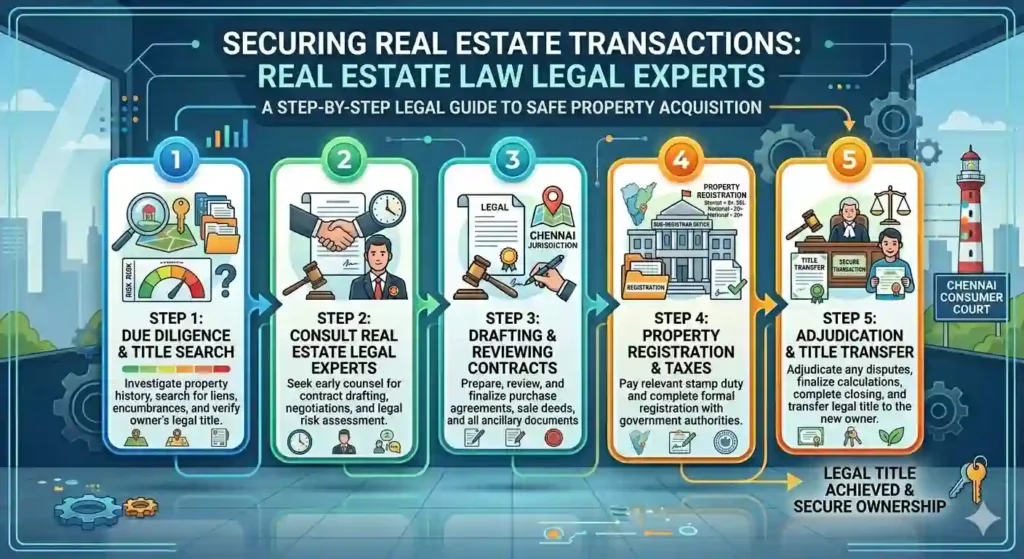
Importance of Legal Due Diligence in Property Transactions
Legal due diligence forms the foundation of secure real estate transactions. Buyers should verify ownership rights before purchasing property. Consequently, title defects can surface before funds change hands. Lawyers examine title deeds, encumbrance certificates, approvals, and revenue records. Developers and investors also benefit from comprehensive legal reviews. Furthermore, due diligence identifies pending litigation and regulatory violations. Financial institutions often require verification before approving loans. Accurate investigations reduce fraud risks and ownership disputes. Legal experts review historical transactions to establish ownership continuity. Strong due diligence supports informed decision-making and investment protection. Property purchasers should never rely solely on verbal assurances. Professional legal scrutiny provides confidence and safeguards long-term ownership interests.
Common Legal Issues in Real Estate Transactions
Property transactions frequently involve legal and regulatory complications. Buyers and investors should understand common risks before proceeding. Therefore, awareness becomes an important preventive tool.
| Legal Issue | Potential Risk |
|---|---|
| Defective Title | Ownership disputes |
| Encumbrances | Financial liabilities |
| Unauthorized Construction | Regulatory action |
| Boundary Disputes | Litigation |
| Fraudulent Sales | Financial loss |
Common concerns include:
- Forged documents.
- Multiple sales.
- Land acquisition disputes.
- Incomplete approvals.
- Illegal layouts.
Early legal intervention reduces exposure to costly disputes and delays.
Key Documents Required for Property Verification
Property verification requires examination of several important documents. Each document contributes to ownership validation and compliance assessment. Consequently, missing records may indicate legal concerns. Title deeds establish ownership history and transfer legitimacy. Encumbrance certificates reveal registered liabilities affecting the property. Additionally, approvals from planning authorities confirm regulatory compliance. Revenue records verify land classification and tax status. Legal professionals review documentation for inconsistencies and risks. Accurate verification prevents future ownership challenges and financial losses. Buyers should obtain certified copies whenever possible. Thorough document analysis strengthens transaction security and legal certainty. Professional guidance ensures proper interpretation of complex property records.
Real Estate Regulatory Framework in India
Indian real estate transactions operate within a comprehensive legal framework. Multiple statutes regulate ownership, registration, and development activities. Therefore, compliance remains critical for all stakeholders. RERA promotes transparency and accountability in real estate projects. Registration laws govern transfer documentation and execution requirements. Furthermore, municipal regulations control construction and land-use compliance. Revenue authorities maintain land records and taxation information. Courts and tribunals interpret property rights and contractual obligations. Legal advisors assist clients in navigating regulatory requirements effectively. Compliance failures may result in penalties, delays, and litigation. Understanding applicable laws enhances transaction security and reduces legal uncertainty significantly.
Role of RERA in Protecting Buyers
RERA significantly strengthened consumer protection within the real estate sector. Developers must comply with disclosure and registration requirements. Consequently, buyers receive greater transparency regarding project details. Regulatory authorities monitor project implementation and statutory obligations. Delayed possession and misleading advertisements often attract regulatory scrutiny. Moreover, aggrieved buyers may pursue remedies before RERA authorities. Developers must maintain accountability throughout project execution. Legal professionals assist clients in filing complaints and pursuing compensation claims. Effective use of RERA mechanisms improves dispute resolution outcomes. Buyers should understand available rights before entering agreements. Strong regulatory oversight promotes confidence within the real estate market.
Property Registration and Stamp Duty Compliance
Property registration establishes legal recognition of ownership transfers. Registration requirements vary according to transaction types and jurisdictions. Therefore, parties should complete documentation accurately and promptly.
Important registration steps include:
- Drafting the agreement.
- Verifying ownership documents.
- Calculating stamp duty.
- Executing registration.
- Updating records.
Additional compliance requirements include:
- Identity verification.
- Witness signatures.
- Tax payments.
- Property valuation.
- Revenue record updates.
Proper registration strengthens ownership rights and reduces future disputes.
Real Estate Fraud and Criminal Remedies
Property fraud remains a significant concern across real estate markets. Fraudsters often exploit documentation gaps and ownership uncertainties. Consequently, buyers should verify every transaction carefully. Serious fraud allegations may involve forged documents and false representations. The Bharatiya Nyaya Sanhita addresses cheating, forgery, and dishonest conduct. BNSS governs investigation and prosecution procedures where offences arise. Furthermore, the BSA regulates evidentiary standards during proceedings. Victims may approach nearby police stations for criminal complaints. Legal professionals coordinate civil and criminal remedies strategically. Prompt action improves evidence preservation and enforcement effectiveness. Comprehensive legal responses deter misconduct and protect property rights.
Forums and Authorities Handling Property Disputes
Several forums resolve real estate disputes depending upon dispute nature. Jurisdiction varies according to facts and legal issues involved. Therefore, forum selection requires careful legal evaluation. RERA authorities address project-related grievances and buyer complaints. Consumer Commissions hear matters involving service deficiencies and unfair practices. Additionally, civil courts adjudicate title disputes and ownership claims. The CPC governs many civil proceedings concerning property rights. Revenue authorities address land records and classification matters. Legal counsel assists clients in selecting appropriate remedies and forums. Effective litigation strategies improve efficiency and legal outcomes. Proper jurisdictional analysis prevents delays and procedural complications.
Legal Remedies Available in Real Estate Disputes
Property owners and buyers possess several legal remedies. Available relief depends upon facts and applicable laws. Consequently, timely action remains important.
Common remedies include:
| Remedy | Purpose |
|---|---|
| Specific Performance | Enforce agreement |
| Injunction | Prevent interference |
| Compensation | Recover losses |
| Refund | Return investment |
| Possession Relief | Secure ownership |
Additional options include:
- RERA complaints.
- Consumer claims.
- Civil suits.
- Criminal complaints.
- Arbitration proceedings.
Strategic legal planning enhances remedy effectiveness and dispute resolution outcomes.
Evidence and Documentation in Property Litigation
Evidence plays a decisive role in real estate disputes. Courts rely heavily upon documentary records and transaction history. Consequently, parties should preserve relevant materials carefully. Title deeds often represent primary ownership evidence. Registration documents establish transfer validity and transaction chronology. Moreover, tax receipts support possession and compliance claims. The BSA governs admissibility and evaluation of evidence. Legal professionals organize records for litigation and regulatory proceedings. Strong documentation improves credibility and strengthens legal positions. Accurate recordkeeping reduces uncertainty during adjudication. Comprehensive evidence management supports favorable outcomes across forums and authorities.
NRI Real Estate Transactions and Legal Compliance
NRIs frequently invest in Indian real estate markets. Cross-border transactions require additional legal and regulatory considerations. Therefore, professional guidance becomes especially valuable. Buyers should verify ownership, approvals, and repatriation requirements carefully. Power of attorney documentation often requires special attention. Furthermore, taxation obligations may affect transaction planning significantly. Legal advisors coordinate compliance with applicable regulations and banking requirements. Proper documentation reduces transaction risks and procedural complications. NRIs benefit from detailed due diligence before investment decisions. Strategic legal support protects financial interests and ownership rights effectively. Careful planning promotes secure and compliant property acquisitions.
Why Choose Virtuoso Legal Services
Virtuoso Legal Services provides comprehensive real estate legal solutions. Our team advises buyers, sellers, developers, investors, and NRIs. We conduct title verification, due diligence, and regulatory compliance reviews. Moreover, we assist with registrations, agreements, litigation, and dispute resolution. Clients receive practical legal strategies tailored to transaction objectives. We represent parties before courts, tribunals, RERA authorities, and regulatory bodies. Timely legal intervention prevents avoidable risks and financial losses. Professional representation strengthens ownership protection and enforcement efforts. Virtuoso Legal Services remains committed to securing real estate transactions through reliable legal expertise and client-focused solutions.
Frequently Asked Questions
FAQ 1: Why is title verification important before buying property?
Title verification confirms ownership legitimacy, identifies encumbrances, and reduces risks of fraud, litigation, and ownership disputes.
FAQ 2: What documents should buyers verify before purchase?
Buyers should examine title deeds, encumbrance certificates, approvals, tax records, and registration documents carefully.
FAQ 3: Can I file a complaint under RERA?
Yes. Buyers may approach RERA authorities regarding delays, misrepresentations, project violations, and developer non-compliance.
FAQ 4: What remedies exist for property fraud?
Victims may pursue civil claims, criminal complaints, compensation, injunctions, and regulatory remedies depending on circumstances.
FAQ 5: Which forum handles title disputes?
Civil courts generally adjudicate ownership, title, possession, and related property rights disputes.
FAQ 6: Why should NRIs seek legal assistance for property purchases?
Legal support helps verify ownership, ensure compliance, manage documentation, and reduce cross-border transaction risks.
Read More
- Ensuring Rail Safety: Railway Law Legal Opinion Services
- Navigating Public Sector Laws: Public Law Legal Experts
- Advocating for Public Interest: Public Interest Litigation Legal Opinion Services
- Safeguarding Property Rights: Property Law Legal Experts
- Empowering Legal Representation: Power of Attorney Legal Opinion Services
- Ministry of Housing and Urban Affairs (MoHUA)



![Real Estate Title Verification Services. Rajendra Law Office [ Best Legal Opinion Services 24x7 ] Find the Best Real Estate Attorneys](https://legalopinion.org.in/wp-content/uploads/2023/01/Real-Estate-Title-Verification-Services-768x432.jpg)