![Virtuoso Legal Services [Best Legal Opinion Services 24×7]](https://legalopinion.org.in/wp-content/uploads/2023/09/cropped-logo.png)
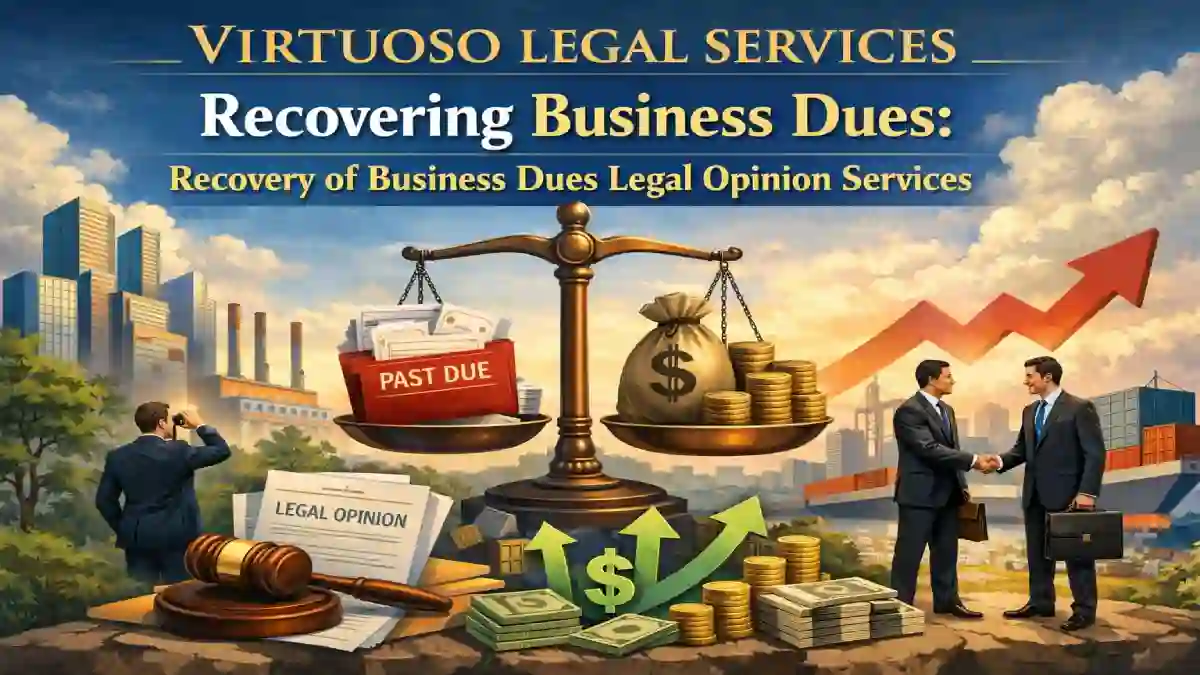
Recovering Business Dues: Recovery of Business Dues Legal Opinion Services
Recovering Business Dues – Unpaid business dues can disrupt cash flow and operational stability. Businesses often face delayed payments from customers, vendors, and contractual partners. Therefore, prompt legal evaluation becomes essential. A legal opinion identifies recovery options and enforcement strategies. Lawyers assess contracts, invoices, acknowledgments, and correspondence. Moreover, they determine jurisdiction and limitation issues. Commercial disputes frequently involve breach of contract, payment defaults, and dishonoured commitments. Legal due diligence improves recovery prospects significantly. Businesses should act before claims become time-barred. Professional legal support strengthens negotiation and litigation efforts.
Recovering Business Dues: Recovery of Business Dues Legal Opinion Services – Virtuoso Legal Services
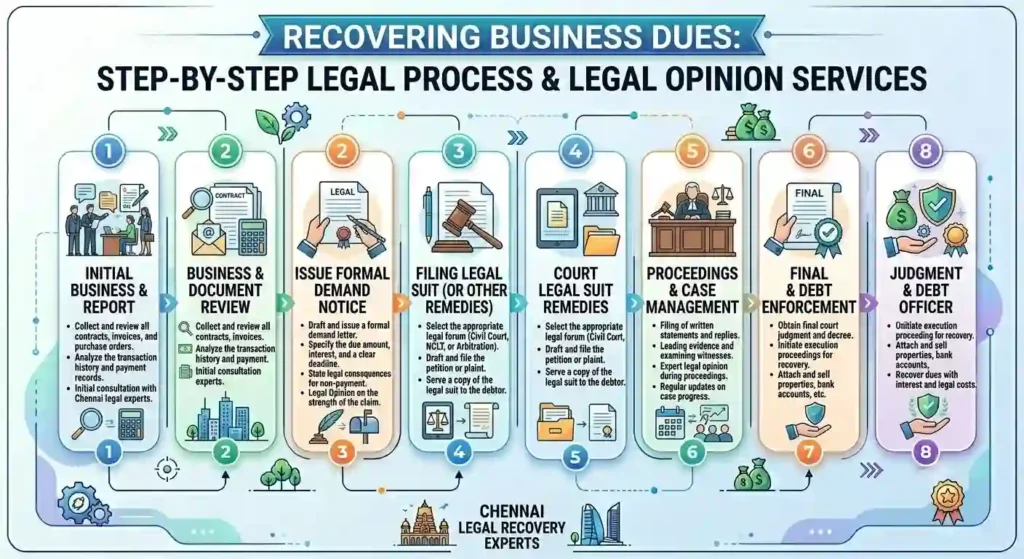
Common recovery matters include:
• Unpaid invoices
• Contractual defaults
• Service payment disputes
• Supply chain dues
| Authority | Function |
|---|---|
| Civil Court | Recovery suits |
| Commercial Court | Commercial disputes |
| MSME Council | MSME claims |
Importance of a Legal Opinion Before Recovery Proceedings
A legal opinion provides clarity regarding rights, liabilities, and available remedies. Businesses should evaluate evidence before initiating proceedings. Consequently, unnecessary litigation risks reduce substantially. Lawyers review contracts, purchase orders, invoices, and payment records. They also identify weaknesses within the claim. Legal analysis helps determine whether settlement or litigation serves better interests. Furthermore, a professional opinion supports strategic decision-making. Important advantages include:
- Claim assessment
- Evidence review
- Jurisdiction analysis
- Recovery planning
| Issue | Suggested Remedy |
|---|---|
| Payment default | Legal notice |
| Contract breach | Recovery suit |
| Fraudulent conduct | Criminal complaint |
Common Causes of Business Payment Defaults
Payment disputes arise from several commercial circumstances. Businesses often encounter delayed payments, disputed invoices, and contractual disagreements. Therefore, proper documentation remains critical. Some debtors intentionally delay payments to gain financial advantage. Others dispute performance obligations or delivery terms. Legal professionals analyze transaction history carefully. Common causes include:
• Contract violations
• Delivery disputes
• Financial distress
• Invoice disagreements
• Fraudulent conduct
| Business Issue | Legal Concern |
|---|---|
| Delayed payment | Breach of contract |
| Returned goods | Commercial dispute |
| False objections | Recovery challenge |
Contractual Breach and Commercial Disputes
Commercial agreements establish rights and obligations between parties. Breach occurs when a party fails contractual commitments. Consequently, businesses may suffer financial losses. Legal experts review contractual clauses and transaction records. Important evidence includes:
- Signed agreements
- Purchase orders
- Delivery confirmations
- Payment communications
Commercial courts frequently adjudicate such disputes. Therefore, strong documentation significantly improves recovery prospects. Businesses should preserve records carefully throughout transactions.
Non-Payment of Invoices and Services
Unpaid invoices represent a common business challenge. Service providers frequently encounter delayed settlements. Therefore, businesses should issue timely demands. Legal review helps identify enforceable rights. Important documents include:
• Tax invoices
• Service agreements
• Delivery records
• Email communications
Prompt legal intervention often encourages voluntary settlement. Consequently, businesses may avoid lengthy litigation and additional expenses.
Recovery Challenges in Long-Term Contracts
Long-term commercial relationships sometimes generate payment disputes. Contractual complexity may create interpretational disagreements. Therefore, legal scrutiny remains important. Key concerns include:
- Milestone payments
- Scope disputes
- Delay allegations
- Termination issues
Experienced lawyers evaluate contractual obligations carefully. Moreover, they recommend practical recovery strategies and risk mitigation measures.
Legal Notices as a Recovery Tool
A legal notice often serves as the first recovery step. Businesses formally demand payment through documented communication. Consequently, debtors understand the seriousness of potential proceedings. A properly drafted notice strengthens future claims. Important notice components include:
• Outstanding amount
• Supporting transactions
• Payment deadline
• Legal consequences
Many disputes resolve after notice issuance. Therefore, businesses should obtain professional assistance before dispatching recovery notices.
Benefits of a Professionally Drafted Legal Notice
Professional drafting improves clarity and legal effectiveness. Lawyers present facts accurately and persuasively. Consequently, recipients often respond more seriously. Key benefits include:
• Strong legal positioning
• Accurate claim presentation
• Limitation protection
• Settlement opportunities
A well-prepared notice frequently encourages negotiations and early resolution. Therefore, businesses often recover dues without litigation.
Settlement and Negotiation Opportunities
Settlement remains an efficient recovery method. Businesses save time and litigation expenses through negotiated resolutions. Therefore, legal negotiation deserves consideration. Important settlement advantages include:
- Faster recovery
- Reduced costs
- Business continuity
- Flexible payment arrangements
Lawyers negotiate strategically while protecting commercial interests. Moreover, settlement agreements create enforceable obligations.
Recovery Through Courts, Tribunals, and Forums
Businesses may pursue judicial remedies when negotiations fail. Proper forum selection remains essential. Therefore, legal evaluation should occur early. Commercial courts hear qualifying commercial disputes. Civil courts exercise jurisdiction over general recovery claims. MSME facilitation mechanisms support eligible enterprises. Common forums include:
• Commercial Courts
• Civil Courts
• MSME Facilitation Councils
• Arbitration Tribunals
| Forum | Purpose |
|---|---|
| Commercial Court | Commercial recovery |
| Civil Court | Debt recovery |
| Arbitration | Contract disputes |
Commercial Recovery Suits Under CPC Principles
Recovery suits remain a common legal remedy. Businesses seek payment through civil proceedings. Consequently, courts evaluate evidence and contractual obligations. CPC procedures govern filing and adjudication. Lawyers prepare pleadings and supporting documents carefully. Important requirements include:
• Cause of action
• Jurisdiction details
• Supporting records
• Limitation compliance
Strong documentation significantly improves litigation outcomes. Moreover, procedural compliance prevents avoidable delays and objections.
Evidence Requirements Under the BSA
Evidence forms the foundation of recovery proceedings. Businesses should maintain accurate records consistently. Therefore, documentary preservation remains essential. The BSA recognizes modern evidentiary principles. Important evidence includes:
• Agreements
• Invoices
• Bank records
• Electronic communications
Courts evaluate authenticity and relevance carefully. Consequently, organized documentation strengthens recovery claims substantially.
Arbitration and Alternative Dispute Resolution
Many commercial contracts contain arbitration clauses. Arbitration often provides faster dispute resolution. Therefore, businesses should review contractual provisions carefully. Advantages include:
- Confidential proceedings
- Flexible procedures
- Faster decisions
- Commercial expertise
Arbitration awards remain legally enforceable. Consequently, businesses obtain practical recovery mechanisms outside traditional litigation.
Fraudulent Non-Payment and Criminal Remedies
Certain payment defaults involve fraudulent conduct. Businesses should assess criminal elements carefully. Therefore, legal analysis becomes necessary. Fraud, cheating, and dishonest inducement may attract criminal liability. The BNS addresses several commercial misconduct offences. The BNSS governs procedural aspects. Victims may approach nearby police stations where facts justify criminal action. Available remedies include:
• Criminal complaints
• FIR registration requests
• Investigation proceedings
• Asset tracing efforts
| Authority | Function |
|---|---|
| Police Station | Criminal investigation |
| Magistrate Court | Criminal proceedings |
| Higher Courts | Supervisory remedies |
Strategic Recovery Planning Enhances Results
Successful recovery requires a structured legal strategy. Lawyers evaluate facts, evidence, and debtor conduct carefully. Consequently, businesses pursue effective remedies. Strategic planning includes:
• Claim assessment
• Debtor analysis
• Forum selection
• Enforcement planning
Professional guidance improves recovery efficiency. Moreover, businesses avoid procedural mistakes and unnecessary expenses.
Enforcement of Decrees and Recovery Orders
Obtaining a favorable order represents only one stage. Enforcement ensures actual recovery of dues. Therefore, businesses should plan execution proceedings carefully. Enforcement options include:
- Asset attachment
- Garnishee proceedings
- Property execution
- Court-directed recovery
Timely enforcement strengthens recovery outcomes and protects commercial interests effectively.
Legal Support from Virtuoso Legal Services
Virtuoso Legal Services assists businesses with comprehensive dues recovery solutions. The firm evaluates claims and recommends strategic remedies. Therefore, clients receive practical legal support. Services include:
• Recovery legal opinions
• Legal notices
• Commercial litigation
• Arbitration support
• Enforcement proceedings
Experienced lawyers pursue efficient recovery strategies. Consequently, businesses improve collection rates while minimizing legal risks.
Conclusion
Business dues recovery demands careful planning and strong legal support. A professional legal opinion identifies risks and available remedies. Moreover, early intervention improves recovery prospects significantly. Businesses should preserve records and act within limitation periods. Strategic legal action helps recover outstanding payments efficiently. Proper guidance transforms claims into enforceable recoveries.
FAQs
FAQ 1: What documents support a business dues recovery claim?
Invoices, agreements, purchase orders, delivery records, emails, acknowledgments, and bank statements commonly support recovery proceedings.
FAQ 2: Can businesses recover dues without filing a court case?
Yes. Legal notices, negotiations, mediation, and arbitration often resolve payment disputes without formal litigation.
FAQ 3: Which court handles business dues recovery matters?
Commercial Courts, Civil Courts, and arbitration forums may handle recovery disputes depending on claim nature and jurisdiction.
FAQ 4: Can criminal action apply to unpaid business dues?
Yes. Fraudulent conduct, cheating, and dishonest inducement may justify criminal remedies under applicable legal provisions.
FAQ 5: What role does a legal opinion play in recovery?
A legal opinion assesses evidence, identifies remedies, evaluates risks, and recommends suitable recovery strategies.
FAQ 6: How quickly should businesses begin recovery action?
Businesses should act promptly because delays may affect evidence, limitation periods, and overall recovery prospects.
Read More
- Securing Real Estate Transactions: Real Estate Law Legal Experts
- Ensuring Rail Safety: Railway Law Legal Opinion Services
- Navigating Public Sector Laws: Public Law Legal Experts
- Advocating for Public Interest: Public Interest Litigation Legal Opinion Services
- Safeguarding Property Rights: Property Law Legal Experts
- Ministry of Corporate Affairs (MCA)