![Virtuoso Legal Services [Best Legal Opinion Services 24×7]](https://legalopinion.org.in/wp-content/uploads/2023/09/cropped-logo.png)

Homeownership Made Easy: Mortgage Deed Legal Experts
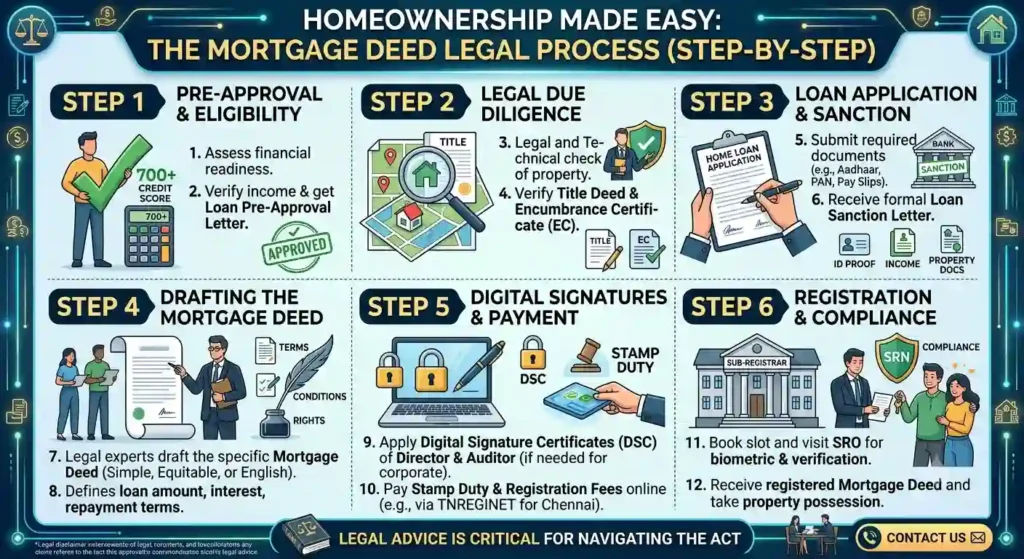
Mortgage Deed Legal Experts – A mortgage deed creates a legal interest in immovable property to secure repayment of a debt. The Transfer of Property Act, 1882 primarily governs mortgages in India. A borrower generally mortgages property while retaining possession, depending upon the mortgage type. The deed records the property description, loan amount, repayment terms, interest, default consequences, and parties’ obligations. Therefore, careful drafting protects both borrowers and lenders from future disputes. Registration requirements depend upon the nature and value of the transaction. Additionally, applicable stamp duty can vary between Indian states. A legal expert should verify title documents before drafting or signing mortgage documentation. Moreover, the deed should match the underlying loan agreement and sanctioned facility. Proper legal review reduces risks involving defective title, unclear clauses, improper execution, and enforcement disputes. Consequently, professional mortgage deed assistance can make home financing legally safer.
Homeownership Made Easy: Mortgage Deed Legal Experts – Virtuoso Legal Services
Types of Mortgage Arrangements
Indian property law recognises different mortgage forms, each creating distinct rights and obligations. Common arrangements include simple mortgage, mortgage by conditional sale, usufructuary mortgage, English mortgage, and deposit of title deeds. The parties’ intention and transaction structure determine the applicable mortgage category. Therefore, borrowers should understand the legal consequences before signing documents. A simple mortgage generally allows the lender to seek sale through legal process after default. A mortgage involving title deeds can operate differently depending upon statutory requirements and circumstances. Furthermore, state registration and stamp laws can affect documentation. Legal counsel should review possession terms, redemption rights, interest clauses, and default provisions carefully. Additionally, parties should verify whether additional security documents accompany the mortgage. Choosing appropriate documentation can prevent confusion during repayment, refinancing, property sale, or enforcement proceedings.
Mortgage Documentation and Registration
Essential Mortgage Deed Clauses
A properly drafted mortgage deed should clearly identify the borrower, lender, property, debt, and security obligations. The document should state the principal amount, interest, repayment schedule, and applicable default provisions. It should also describe title documents deposited or referenced within the transaction. Therefore, property schedules require accurate survey numbers, boundaries, extent, address, and registration particulars. Redemption provisions should clearly explain when and how the borrower can discharge the mortgage. Furthermore, the deed should address insurance, taxes, maintenance, transfer restrictions, and other relevant obligations. Parties should examine acceleration clauses because lenders may demand early repayment after specified defaults. Legal review should also identify unilateral powers, excessive charges, and ambiguous enforcement provisions. Consequently, professional drafting helps balance contractual certainty with statutory rights. A mortgage lawyer can coordinate documentation with banks, housing finance companies, and registration authorities.
Registration and Stamp Duty
Mortgage transactions can involve stamp duty and registration requirements under applicable state law. The Indian Registration Act, 1908 establishes important rules concerning registrable instruments. However, treatment differs according to mortgage structure, consideration, possession, and applicable state legislation. Therefore, parties should obtain current state-specific advice before executing a mortgage deed. In Tamil Nadu, registration and stamp requirements require particular attention during property financing transactions. The Sub-Registrar Office handles applicable registration functions under the state registration framework. Additionally, inadequate stamping can create serious evidentiary and enforceability complications. Parties should calculate applicable charges before completing execution and registration. Legal professionals can verify property documents, registration details, identity documents, and execution formalities. Consequently, proper registration planning prevents avoidable disputes over validity and priority. Borrowers should retain certified copies, payment receipts, registration records, and lender acknowledgements.
Title Verification Before Mortgage
Property Title Due Diligence
Lenders usually examine property title before accepting residential property as mortgage security. Borrowers should independently conduct legal due diligence before offering their property as collateral. A title search can identify ownership history, encumbrances, prior mortgages, litigation, and transfer restrictions. Therefore, lawyers should examine sale deeds, parent documents, patta, encumbrance certificates, approvals, and tax records. Additional scrutiny may apply to inherited, jointly owned, or development-related properties. Furthermore, property searches should identify existing charges recorded with appropriate authorities. Legal counsel can also examine court records for pending property disputes. Consequently, title verification reduces the risk of financing a defective or disputed property. Buyers purchasing mortgaged property should obtain lender release documentation before completing transactions. A detailed title report provides valuable protection during lending, refinancing, resale, and inheritance planning.
Encumbrance and Existing Charges
An encumbrance search helps determine whether a property carries registered mortgages or other recorded interests. However, an encumbrance certificate alone may not reveal every possible legal claim. Therefore, lawyers should examine additional records, court proceedings, revenue documents, and available lender information. Existing mortgages require proper discharge before a property can transfer with clear title. Furthermore, borrowers should verify whether earlier loans remain outstanding despite apparent repayment. Banks normally issue release or satisfaction documents after complete loan closure. These documents can support subsequent registration and property transactions. Additionally, companies may require charge-related compliance with the Ministry of Corporate Affairs. Individual homeowners face different procedures depending upon ownership and borrowing structures. Consequently, legal due diligence should cover both property records and lender records. Professional mortgage deed lawyers can identify hidden risks before clients sign financing documents.
Mortgage Rights, Defaults and Remedies
Borrower Rights and Responsibilities
Right of Redemption
The right of redemption remains a fundamental protection available to a mortgagor. Section 60 of the Transfer of Property Act recognises redemption upon payment or tender of the mortgage money. Therefore, lenders cannot treat secured property as permanently transferred merely because financing exists. Borrowers should understand redemption terms before accepting settlement proposals or enforcement actions. Furthermore, contractual clauses should not improperly defeat statutory redemption rights. A borrower facing financial difficulty should communicate promptly with the lender. Negotiation may provide restructuring, settlement, refinancing, or repayment alternatives depending upon circumstances. Legal counsel can review outstanding amounts, notices, interest calculations, and enforcement steps. Consequently, early intervention may preserve valuable options before enforcement becomes advanced. Borrowers should maintain payment records, lender correspondence, and security documents. Proper legal advice becomes especially important when lenders initiate possession, sale, or recovery proceedings.
Default and Mortgage Enforcement
Loan default can trigger contractual and statutory remedies against mortgaged property. The lender’s available remedy depends upon the mortgage type, agreement, applicable statute, and transaction circumstances. Therefore, borrowers should examine every demand notice carefully before responding. Secured creditors may invoke the SARFAESI Act where statutory conditions apply. Such enforcement can involve demand notices, possession measures, and sale proceedings. However, statutory safeguards and borrower remedies remain important throughout the process. Legal counsel can assess whether notices contain factual, procedural, or statutory defects. Furthermore, borrowers may challenge eligible enforcement measures before the Debt Recovery Tribunal. Civil court jurisdiction can become restricted in matters falling within specialised statutory mechanisms. Consequently, forum selection requires careful legal analysis. Prompt representation can help borrowers understand repayment options, settlement possibilities, and available statutory remedies.
Courts, Tribunals and Legal Remedies
Debt Recovery Tribunal Remedies
The Debt Recovery Tribunal handles applications arising under specified debt recovery and secured enforcement laws. A borrower challenging certain SARFAESI measures may approach the DRT under Section 17. Therefore, legal strategy should consider statutory limitation periods and documentary evidence. Lawyers can review demand notices, possession notices, sale notices, valuation reports, and lender communications. Additionally, procedural defects may influence the available relief in appropriate cases. The tribunal can examine statutory compliance and grant remedies within its jurisdiction. Borrowers should not delay legal advice after receiving possession or auction notices. Furthermore, settlement negotiations can continue alongside appropriate legal action when commercially practical. The DRT route differs from ordinary civil litigation and requires specialised knowledge. Consequently, mortgage dispute lawyers should select remedies according to the enforcement stage. Proper preparation can improve the borrower’s ability to protect property interests.
Civil Courts and CPC Remedies
The Code of Civil Procedure, 1908 governs procedure in many civil proceedings involving property and contractual disputes. However, statutory bars can restrict civil court jurisdiction where specialised tribunals possess designated authority. Therefore, lawyers must identify the correct forum before filing a suit. Civil remedies can include injunctions, declarations, damages, and other relief where legally maintainable. Property disputes may also involve partition, title, possession, or specific contractual questions. Furthermore, interim injunction applications can become important when property transactions face immediate threats. Courts examine pleadings, documents, evidence, and applicable statutory provisions before granting relief. Consequently, clients should avoid filing overlapping proceedings without understanding jurisdictional consequences. A mortgage deed legal expert can determine whether civil court, DRT, High Court, or another forum applies. Proper forum selection reduces delays and prevents potentially ineffective litigation.
Criminal and Fraud-Related Issues
BNS, BNSS and BSA Considerations
Mortgage disputes sometimes involve allegations of forgery, cheating, criminal breach of trust, or fraudulent documentation. Such allegations require separate assessment from ordinary loan default or contractual disagreement. The Bharatiya Nyaya Sanhita, 2023 now governs substantive criminal offences in applicable circumstances. The Bharatiya Nagarik Suraksha Sanhita, 2023 governs criminal procedure. Meanwhile, the Bharatiya Sakshya Adhiniyam, 2023 governs evidence matters. Therefore, lawyers should identify whether facts disclose genuine criminal conduct. Police complaints may become relevant when evidence supports cognizable offences. However, ordinary repayment failure does not automatically establish criminal liability. Legal counsel can assess documents, communications, signatures, transaction records, and electronic evidence. Furthermore, parties should preserve original records and avoid altering relevant digital material. Coordinated civil and criminal strategy can prevent inconsistent statements across different proceedings.
Police Complaints and Fraud Protection
Police authorities can investigate suspected offences involving forged mortgage documents or fraudulent property transactions. However, police stations do not decide ordinary mortgage validity or civil debt disputes. Therefore, complainants should clearly distinguish criminal allegations from contractual disagreements. A complaint should identify relevant transactions, documents, persons, dates, and supporting evidence. Additionally, clients should preserve registration records, bank communications, title documents, and electronic correspondence. The BNS and BNSS provide the current framework for applicable criminal allegations and procedure. BSA principles can affect evidentiary presentation during subsequent proceedings. Legal counsel can assist with complaint drafting, representations, investigation responses, and appropriate court remedies. Furthermore, urgent applications may become necessary where fraudulent property transfers threaten ownership interests. Consequently, early legal intervention can protect evidence and reduce further financial or property damage.
Professional Mortgage Legal Support
Mortgage Deed Review Services
Virtuoso Legal Services can assist homeowners, borrowers, lenders, investors, and property owners with mortgage documentation. Our legal review can examine title documents, mortgage clauses, repayment obligations, registration requirements, and enforcement provisions. Furthermore, we can identify potential risks before clients execute financing documents. Services may include title due diligence, deed drafting, document review, registration guidance, lender negotiation, and dispute strategy. Borrowers can also seek advice regarding default notices, settlement proposals, and redemption rights. Additionally, property owners can obtain assistance before refinancing or transferring mortgaged property. Legal review can identify restrictive clauses that may affect future transactions. Therefore, professional assistance provides practical protection throughout the mortgage lifecycle. Clients should provide complete documents for accurate legal assessment. A tailored opinion can then address applicable state laws, transaction structure, jurisdiction, and available remedies.
Support for NRI Property Owners
NRIs frequently mortgage Indian properties while living outside India. Such transactions can create additional issues involving powers of attorney, identity verification, execution, attestation, and registration. Therefore, NRIs should obtain Indian property-law advice before signing mortgage documents abroad. Legal counsel can review title records and coordinate documentation with lenders and registration authorities. Furthermore, overseas borrowers may need assistance with notices, repayment disputes, enforcement proceedings, or property release. Foreign residence does not eliminate Indian legal requirements concerning Indian immovable property. Consequently, NRIs should understand applicable Indian registration, taxation, banking, and property rules. Lawyers can also assist with authorised representation where legally permitted. Additional review may become necessary when foreign currency, overseas income, or cross-border documentation enters the transaction. Proper planning helps NRIs protect ownership while meeting lender and regulatory requirements.
Mortgage Dispute Prevention Strategy
Preventing mortgage disputes usually costs less than resolving enforcement litigation after default. Homeowners should review title documents and mortgage terms before signing financing agreements. They should also understand interest rates, repayment schedules, default charges, and enforcement consequences. Furthermore, borrowers should preserve every payment receipt and lender communication. Early communication can sometimes support restructuring or negotiated settlement after financial difficulties arise. Legal counsel should review serious notices before borrowers provide admissions or sign settlement documents. Additionally, borrowers should verify property release documents after complete repayment. The following measures can reduce risk:
- Verify clear property title.
- Review mortgage deed clauses.
- Confirm stamp and registration requirements.
- Track repayment obligations.
- Preserve lender correspondence.
- Obtain proper discharge documents.
Consequently, preventive legal support can protect ownership, finances, and future property transactions. Virtuoso Legal Services can provide tailored mortgage documentation and dispute assistance.
Frequently Asked Questions
What is a mortgage deed?
A mortgage deed creates security over immovable property for repayment of a debt. Its validity depends upon applicable property, stamp, registration, and contractual requirements.
Can a borrower challenge mortgage enforcement?
Yes. Eligible borrowers can challenge certain enforcement measures before the Debt Recovery Tribunal. The appropriate remedy depends upon the mortgage, statute, notice, and enforcement stage.
Is mortgage deed registration mandatory?
Registration depends upon the mortgage structure and applicable law. State-specific stamp and registration requirements should receive professional review before execution.
What happens after mortgage repayment?
After full repayment, borrowers should obtain appropriate release, satisfaction, and title-document return records. These documents help establish that the mortgage obligation has ended.
Can NRIs mortgage property in India?
Yes, subject to applicable Indian property, banking, foreign-exchange, documentation, and registration requirements. NRIs should obtain professional advice before executing mortgage documents.
Can police handle mortgage disputes?
Police investigate genuine criminal allegations, not ordinary repayment disputes. Forgery or fraud allegations may justify police action when supporting facts disclose applicable offences.
Read More
- Generational Blessings: Gift Deed Legal Consultations
- Unlocking Dreams: Expert Sale Deed Legal Opinions
- Your Legal Shield: Expert Legal Opinion Services
- Navigating Legal Waters: Comprehensive Legal Opinion Services
- Advocating for Justice: Legal Opinion Services in Chennai
- Department of Financial Services, Ministry of Finance