![Virtuoso Legal Services [Best Legal Opinion Services 24×7]](https://legalopinion.org.in/wp-content/uploads/2023/09/cropped-logo.png)

Lease Your Future: Lease Deed Legal Guidance
Lease Deed Legal Guidance – Lease deed fundamentals: A lease deed records agreed rights and duties between a property owner and tenant. It identifies premises, rent, deposit, duration, permitted use, maintenance, and termination conditions. Moreover, the Transfer of Property Act, 1882 governs important principles concerning leases. Section 105 defines a lease as a transfer of property enjoyment for a specified period. Therefore, parties should carefully draft every commercial and residential lease clause.
Lease Your Future: Lease Deed Legal Guidance – Virtuoso Legal Services
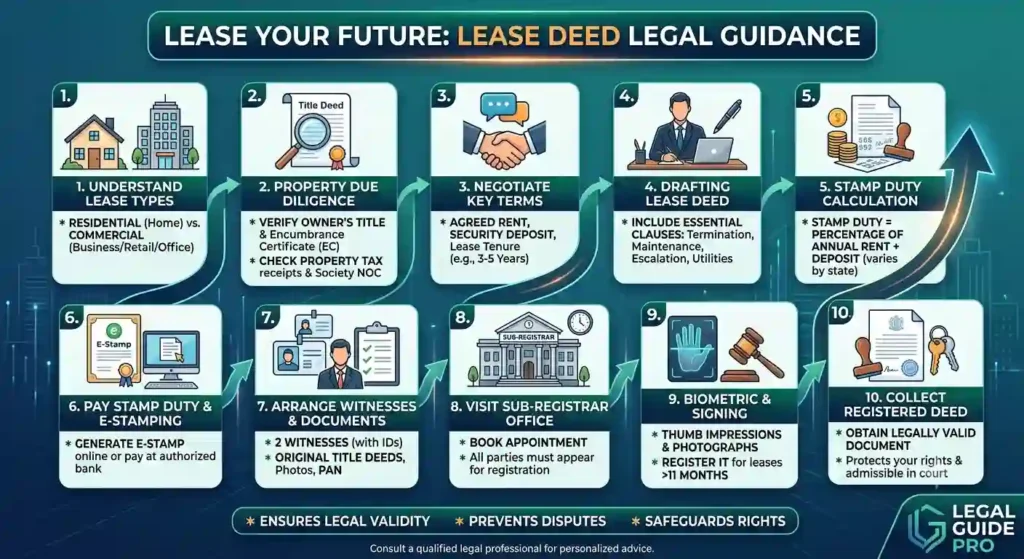
Important terms include:
- Lease duration and renewal.
- Rent escalation and security deposit.
- Repairs, taxes, utilities, and maintenance.
- Subletting and assignment restrictions.
- Default and termination procedures.
A properly drafted deed reduces misunderstandings and strengthens contractual certainty. Virtuoso Legal Services provides lease deed drafting, review, negotiation, and legal due diligence. Furthermore, lawyers can adapt clauses according to property type and transaction requirements.
Essential Lease Deed Clauses
Clauses protecting both parties: Every lease deed should clearly describe the premises and commercial arrangement. The document should state the property’s complete address, measurements, boundaries, and permitted usage. Additionally, rent, deposit, payment dates, escalation, and grace periods require precise wording. Parties should define maintenance responsibilities for structural and routine repairs. Furthermore, insurance, utilities, property taxes, and statutory charges need proper allocation. A strong deed should address:
- Lock-in period and minimum commitment.
- Renewal conditions and revised rent.
- Subletting and assignment.
- Inspection and access rights.
- Default, termination, and handover.
Therefore, vague provisions can create avoidable disputes. Lawyers should also address notices, indemnity, dispute resolution, and jurisdiction. Consequently, professionally drafted clauses provide clearer remedies when disagreements arise. Virtuoso Legal Services reviews existing deeds and identifies commercially unreasonable or legally risky provisions.
Registration, Stamp Duty and Validity
Registration requirements: Lease registration depends upon the lease duration and applicable statutory requirements. Section 17 of the Registration Act, 1908 identifies documents requiring compulsory registration. Therefore, parties should determine registration requirements before executing the lease. Stamp duty also depends upon applicable State legislation and transaction characteristics. In Tamil Nadu, parties should verify current registration procedures and applicable charges. Moreover, registration creates stronger documentary evidence concerning the transaction. An unregistered instrument may create limitations in relying upon its terms. Consequently, legal advice should precede possession and substantial financial payments. Lawyers should verify identity, authority, property description, execution, stamping, and registration requirements. They can also coordinate registration documentation with the appropriate Sub-Registrar Office. Proper compliance reduces future disputes involving enforceability, possession, rent, renewal, and termination.
Rent, Deposit and Escalation Terms
Financial clauses: Rent provisions should clearly state the monthly amount, payment date, mode, and applicable taxes. Security deposit clauses should specify amount, permitted deductions, and refund timelines. Additionally, escalation provisions should identify percentage increases and effective dates. Parties should clarify whether maintenance charges form part of rent or remain separate. Furthermore, delayed payment should attract clearly defined contractual consequences. A lease deed may also specify bank details and payment records. Therefore, maintaining documented payment evidence remains important throughout the tenancy. Landlords should avoid unilateral changes unless the agreement permits them. Tenants should understand every financial obligation before signing. Virtuoso Legal Services reviews rent clauses to identify ambiguity and excessive exposure. Clear financial provisions can prevent disputes concerning arrears, deductions, interest, deposits, and renewal.
Repairs, Maintenance and Property Condition
Maintenance responsibilities: Lease disputes often arise because parties misunderstand repair and maintenance obligations. A deed should distinguish structural repairs from routine maintenance responsibilities. Landlords commonly retain responsibility for major structural defects and essential building systems. Tenants may handle ordinary upkeep, cleanliness, and minor repairs according to contractual terms. However, parties should expressly define these responsibilities rather than relying upon assumptions. Furthermore, the property’s condition should receive documentation before possession. Photographs, inventories, meter readings, and inspection reports can support future claims. Therefore, parties should attach an appropriate condition report where practical. Tenants should promptly report serious defects through written communication. Landlords should preserve records concerning repair requests and completed work. Consequently, proper documentation can reduce arguments concerning damage and restoration. Virtuoso Legal Services can draft detailed maintenance clauses suited to residential and commercial properties.
Subletting, Assignment and Alterations
Controlling property use: Lease deeds should clearly regulate subletting, assignment, licensing, and alterations. Tenants should not assume they can transfer possession without contractual permission. Similarly, landlords should define whether structural or cosmetic modifications require written consent. Furthermore, commercial tenants may require permissions for signage, equipment, interiors, or business operations. The agreement should establish approval procedures and restoration obligations. Therefore, every proposed alteration should comply with building regulations and applicable permissions. Unauthorised subletting can create serious possession and contractual disputes. Additionally, assignment provisions should distinguish corporate restructuring from ordinary transfer. Lawyers can draft consent requirements that balance commercial flexibility with owner protection. Consequently, precise clauses reduce disputes involving third-party occupants and altered premises. Virtuoso Legal Services advises landlords and tenants regarding assignment, subletting, alterations, licensing, and contractual compliance.
Lock-In Period and Early Termination
Managing premature exit: A lock-in clause establishes a minimum commitment period for specified lease arrangements. Parties should understand whether termination during lock-in triggers compensation or other contractual consequences. Moreover, termination provisions should identify valid grounds and required notice periods. Default, insolvency, illegal use, persistent arrears, and serious breach may require specific treatment. Therefore, drafting should distinguish termination for convenience from termination for breach. Notice methods should also specify email, registered post, courier, or other agreed channels. Courts may examine contractual language when disputes arise concerning premature termination. Consequently, vague termination clauses can increase litigation risk. Lawyers should also address handover procedures, restoration, removal of belongings, and settlement of outstanding dues. Virtuoso Legal Services helps clients negotiate commercially balanced exit provisions. Clear termination clauses can protect investment while providing predictable remedies for contractual breaches.
Tenant and Landlord Due Diligence
Verifying parties and premises: Due diligence should begin before either party signs the lease deed. Landlords should verify tenant identity, business status, financial capacity, and intended property use. Tenants should verify ownership, authority, title documents, approvals, and property condition. Furthermore, corporate tenants may require board approvals and authorised signatories. Individual owners should provide appropriate ownership documents and identity records. Where representatives execute documents, their authority requires careful verification. Therefore, lawyers should examine powers of attorney and corporate authorisations when applicable. Property use should also comply with zoning, building, licensing, and local authority requirements. Additionally, tenants should confirm that utilities and essential facilities remain legally available. Proper due diligence reduces impersonation, unauthorised leasing, and ownership-related disputes. Virtuoso Legal Services provides legal verification before lease execution, possession, renewal, or substantial investment.
Commercial Lease Legal Issues
Business tenancy protection: Commercial leases require additional attention because business operations depend upon stable premises. Tenants may invest significantly in interiors, equipment, branding, and customer infrastructure. Therefore, the lease should address business continuity and access rights. Rent escalation should remain commercially predictable and properly documented. Furthermore, operating hours, signage, parking, utilities, and common facilities may require specific clauses. Landlords may need protection against hazardous activities, regulatory breaches, or unauthorised use. Tenants may require suitable renewal rights and compensation arrangements for approved improvements. Consequently, commercial leases benefit from detailed negotiation before execution. Disputes may involve civil courts, arbitration forums, or statutory authorities depending upon the agreement. Lawyers should review exclusive jurisdiction and dispute-resolution clauses carefully. Virtuoso Legal Services assists businesses with drafting, negotiation, renewal, termination, and lease dispute strategy.
Residential Lease Legal Issues
Protecting residential tenancy interests: Residential leases should clearly establish rent, deposit, duration, maintenance, access, and termination rights. Tenants should understand restrictions concerning guests, pets, alterations, and property use. Landlords should establish reasonable inspection procedures while respecting lawful tenant possession. Moreover, deposit deductions should follow agreed contractual terms and documented damage assessment. Therefore, parties should record the property’s condition before possession begins. Police verification requirements may apply according to local administrative practices. However, such verification does not replace proper lease documentation. Disputes can involve arrears, deposit refunds, unlawful eviction, property damage, or possession. Courts and appropriate authorities may provide remedies according to applicable law. Consequently, professional drafting helps prevent misunderstandings during tenancy. Virtuoso Legal Services prepares residential lease deeds with practical clauses covering rights, responsibilities, notices, and dispute resolution.
Dispute Resolution and Civil Remedies
Resolving lease disputes: Lease disagreements may concern rent, possession, termination, damages, repairs, or contractual interpretation. The Code of Civil Procedure, 1908 remains relevant to civil litigation and procedural remedies. Therefore, parties should first identify the appropriate court or forum based upon jurisdiction. Depending upon circumstances, remedies may include injunction, possession, recovery of money, damages, declaration, or specific performance. Arbitration may apply when the lease contains a valid arbitration agreement. Furthermore, mediation can provide a faster consensual resolution for suitable disputes. Lawyers should examine limitation periods and contractual notice requirements before initiating proceedings. Consequently, early legal advice can prevent procedural mistakes. Parties should preserve rent receipts, notices, correspondence, photographs, agreements, and inspection records. Virtuoso Legal Services assesses the dispute and recommends appropriate litigation or alternative dispute-resolution strategies.
BNSS, BNS and Lease-Related Criminal Issues
Criminal law considerations: Most lease disputes remain civil matters, but certain conduct can create criminal allegations. Fraud, cheating, forgery, criminal intimidation, trespass, or misappropriation may require separate assessment. The Bharatiya Nyaya Sanhita, 2023 now governs substantive criminal offences. The Bharatiya Nagarik Suraksha Sanhita, 2023 governs criminal procedure from its commencement. Therefore, parties should distinguish contractual breaches from conduct satisfying criminal offence ingredients. Police stations may receive complaints involving alleged document fraud or unlawful entry. However, criminal allegations should rely upon genuine evidence rather than contractual pressure. Lawyers can advise whether police complaints, civil proceedings, or both remain legally appropriate. Furthermore, the Bharatiya Sakshya Adhiniyam, 2023 governs general evidentiary principles. Digital messages, emails, recordings, and documents may require proper evidentiary treatment. Virtuoso Legal Services coordinates civil and criminal legal strategies where disputes overlap.
Electronic Evidence and Lease Records
Preserving digital proof: Lease transactions increasingly involve electronic agreements, emails, payment records, photographs, and messaging applications. Such records can become important during disputes concerning rent, notices, possession, or consent. The Bharatiya Sakshya Adhiniyam, 2023 provides the current general framework for electronic evidence. Therefore, parties should preserve original electronic records and relevant metadata whenever possible. Screenshots alone may not establish every necessary evidentiary requirement. Furthermore, lawyers should maintain chronological records of communications and payment confirmations. Digital evidence can support allegations involving unauthorised alterations, false promises, or disputed termination notices. However, parties should avoid editing or deleting potentially relevant communications. Courts assess admissibility and evidentiary weight according to applicable law. Consequently, proper preservation can strengthen a party’s legal position. Virtuoso Legal Services advises clients on documentary preparation, electronic records, notices, and evidence management.
Government Authorities and Lease Compliance
Relevant departments: Lease transactions can involve several government departments depending upon property type and location. Registration offices handle registration-related procedures and document records. Revenue authorities may maintain relevant land and property records. Municipal authorities can regulate building use, local taxes, and development permissions. RERA authorities may handle qualifying real-estate project disputes. Therefore, parties should identify the correct authority before filing complaints or applications. Industrial properties may additionally involve specialised regulatory requirements. Commercial establishments may require local licences depending upon their business activities. Furthermore, government or institutional properties can carry special lease conditions. Lawyers should review applicable rules before advising clients. Virtuoso Legal Services can coordinate legal support involving registration offices, municipal bodies, revenue authorities, RERA forums, and courts. Proper authority selection reduces delay and prevents jurisdictional objections.
Lease Renewal and Handover
Planning the lease lifecycle: Lease renewal should occur before the existing term expires. Parties should review rent, maintenance, deposit, insurance, permitted use, and regulatory changes. Furthermore, renewal clauses should specify notice periods and revised commercial terms. A fresh registered instrument may become necessary depending upon the renewed duration and applicable law. Tenants should document property condition during final handover. Landlords should verify outstanding rent, utilities, damages, keys, access cards, and fixtures. Therefore, both parties should sign a detailed handover record. Disputes often arise when possession ends without documented settlement. Consequently, proper closure protects both sides from later claims. Lawyers can review renewal documents and prepare termination or surrender agreements. Virtuoso Legal Services assists clients throughout renewal, surrender, possession handover, and final settlement procedures.
Legal Support for NRIs and Overseas Clients
NRI lease assistance: NRIs may own Indian properties while residing outside the country. They often require reliable representatives for leasing, inspections, rent collection, and dispute management. Therefore, a carefully drafted power of attorney can facilitate lawful local representation. Lawyers should verify ownership, authority, tax considerations, tenant identity, and lease terms. Furthermore, overseas execution requirements can involve authentication, notarisation, apostille, or consular procedures. Applicable FEMA and taxation considerations may also require specialised advice. Tenants dealing with overseas owners should verify the representative’s authority before signing. Consequently, professional review reduces risks involving invalid powers of attorney and unauthorised leasing. Virtuoso Legal Services provides NRI lease deed drafting, review, renewal, termination, and dispute support. The firm can also coordinate documentation with authorised representatives in India. This approach provides practical legal assistance for cross-border property management.
Choosing Virtuoso Legal Services
Professional lease deed advocacy: Virtuoso Legal Services provides end-to-end legal assistance for residential, commercial, industrial, and NRI lease transactions. The firm focuses on practical drafting, risk identification, negotiation, compliance, and dispute prevention. Moreover, lawyers review ownership, authority, registration, rent, deposits, maintenance, termination, and dispute-resolution provisions. Services can include:
- Lease deed drafting and review.
- Registration and stamping guidance.
- Landlord and tenant due diligence.
- Renewal and surrender documentation.
- Lease dispute representation.
- NRI property lease assistance.
- Civil and regulatory legal remedies.
Therefore, clients receive advice tailored to their transaction and property circumstances. Lawyers can recommend negotiation, mediation, arbitration, injunctions, recovery claims, or litigation where appropriate. Furthermore, the team can assess criminal-law concerns involving fraud or forged documents. Clear legal advice before execution often prevents expensive disputes later. Virtuoso Legal Services helps clients lease property confidently while protecting contractual and statutory rights.
Frequently Asked Questions
What is a lease deed?
A lease deed legally records the landlord’s and tenant’s agreed rights, duties, rent, duration, deposit, permitted use, termination, and other important conditions.
Must every lease deed be registered?
Registration depends upon the lease term and applicable law. Parties should obtain legal advice before execution, especially for longer leases requiring compulsory registration.
Can a tenant terminate a lease early?
Yes, where the deed permits early termination or applicable law provides grounds. Notice, lock-in, compensation, and breach clauses require careful review.
Can NRIs execute lease deeds?
Yes. NRIs can lease Indian property through proper documentation and authorised representatives. Power of attorney requirements should receive professional legal review.
What remedies exist for lease disputes?
Depending upon circumstances, remedies may include injunctions, possession claims, recovery, damages, specific performance, arbitration, mediation, or other appropriate proceedings.
Why should lawyers review lease deeds?
Lawyers identify unclear clauses, financial risks, registration issues, defective authority, termination problems, and dispute risks before parties become legally committed.